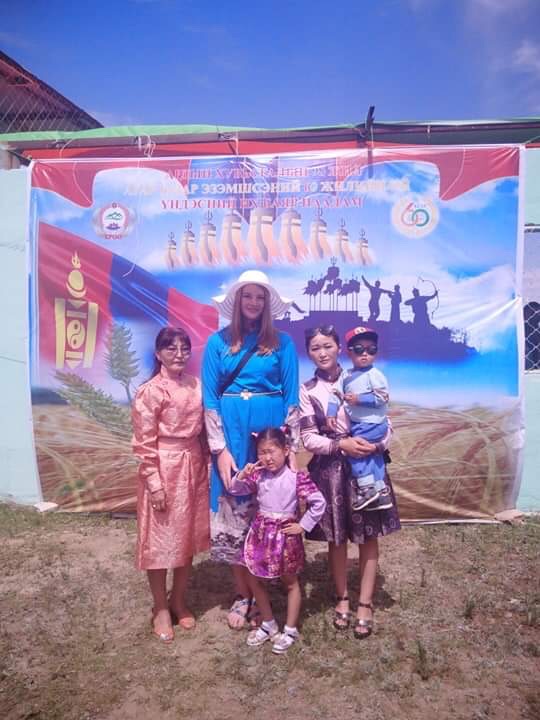
My Mongolian grandma, sister, mom, and brother
It’s pretty common for all of us Peace Corps trainees to question why we’re doing this after we’ve already decided to do it. It’s a question that comes up still a lot even after a significant time in country, I’m told. It’s a question many of us were asked by family, friends, and professors before we left for service. It presented quite a challenge sometimes because what answer is good enough? “I want to change the world.” –too cliché. “I want to become a better person.” –there’s plenty of ways to do that without committing to over two years of service in a country you hadn’t even heard of before you got an email from Peace Corps. “I don’t know” is a HORRIBLE answer for the question, although it often seemed to be the most truthful one. The questions make you doubt. Are my reasons not strong enough to survive a commitment like this? Are there better ways to spend the next chapter of my life? Is it too late to change my mind? The period before leaving can be pretty scary.
Staging in Philadelphia, where all future M30s met for the first time, is when all of these questions, doubts, and negative feelings completely vanished. Finally, I was surrounded by people who didn’t want to know why the hell I’m doing something like this. We all ended up in the same city in the same hotel with the same agenda—get on a plane to Mongolia. It’s not that people at home weren’t supportive of my decision—they completely were! However, there was just no need for validation at this point with this particular group of people. We were all here, we were all possibly crazy, but we’re all going to do it. Instantly, these strangers became everything to me: The people I could last minute rearrange baggage with, the people who may possibly understand every emotion I feel every step of the way, and the people who will become my support system—my family.
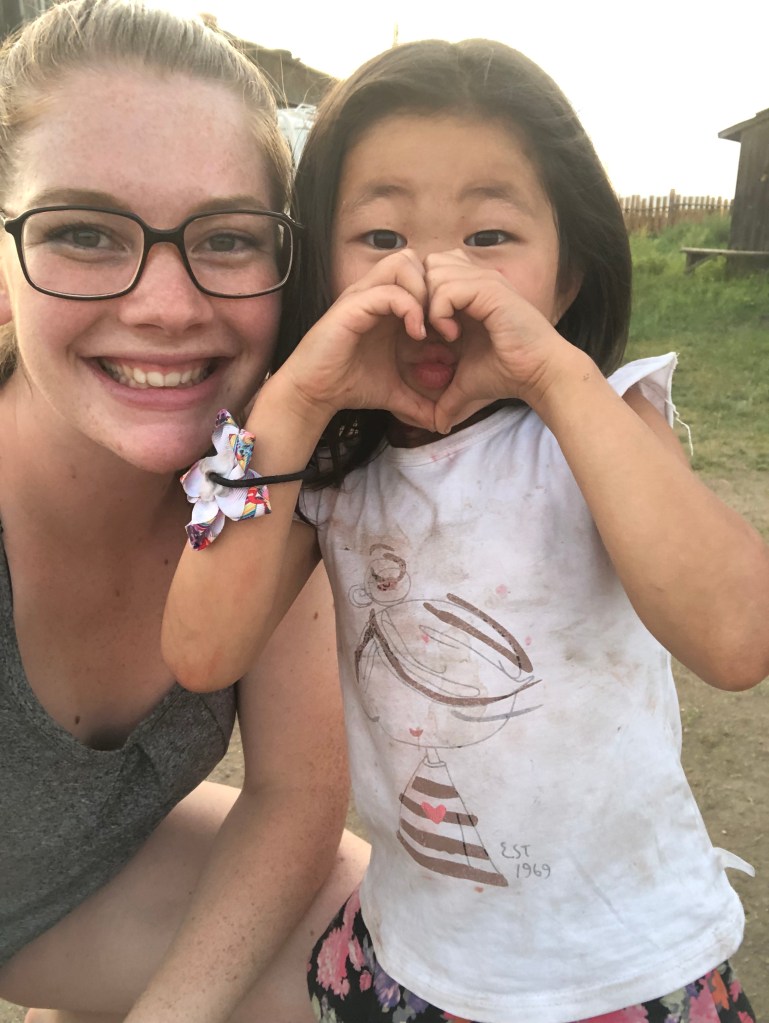
I can’t say for certainty when the moment was, but when a complete stranger reads off your name and tells you that the people standing in front of you are your new family now for the next three months, they don’t instantly feel like family. Even though they introduce you to a home that you will be residing in and a dinner table where you will now eat your meals… the familial feel doesn’t just fabricate in your heart. For me, it took some time, but I recognized the moments when they came. My 6-year-old host sister giving me half her pile of ankle bones (literally, sheep ankle bones… look it up) while playing the game so that I could continue to play with her, even though I was just about to lose. Giving me two ankle bones would have sufficed to allow me to stay in the game. Her generosity was so so sweet, that I didn’t want to just use the Mongolian word for “thank you.” I knew how much she loves to win. (Competition, especially winning competitions, is very important in the younger Mongolian culture.) So, I instead made a heart shape with my hands at her. She made it back. This is now our thing. Anytime I am leaving for language lessons, coming home from TEFL training, or going to sleep at night, we make hearts at each other with our hands. No verbal language. It is such a small and simple action, but it means everything to me, especially because there’s no verbal language barrier involved.
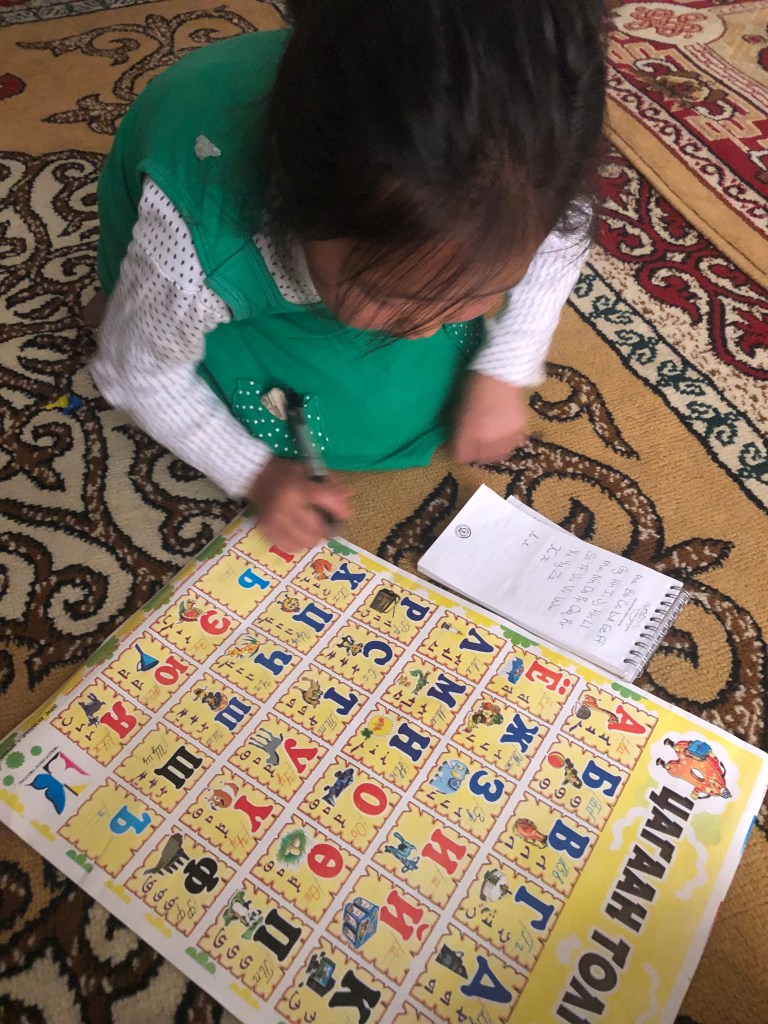
There was a time when my host grandma took my laundry off the clothes line while I was at school and not only folded it nicely and left it near the door to my room, but she hid two apples under a few folded shirts in the pile as a snack (the bruises were even cut off, guys). Or another time when my host aunt (who is 14-years-old), sat on the floor of my room for hours on various nights (often way past my bedtime) drawing various pictures of food, plants, and objects so that we both could label it for each other—I share the English word, she shares the Mongolian. Tonight, she sat in my room for hours again, but this time we graduated to having conversations. Often, a dictionary, Google translate, class notes, and even my planner/calendar were necessary to understand each other, but we did it. These tiny moments are so rewarding.
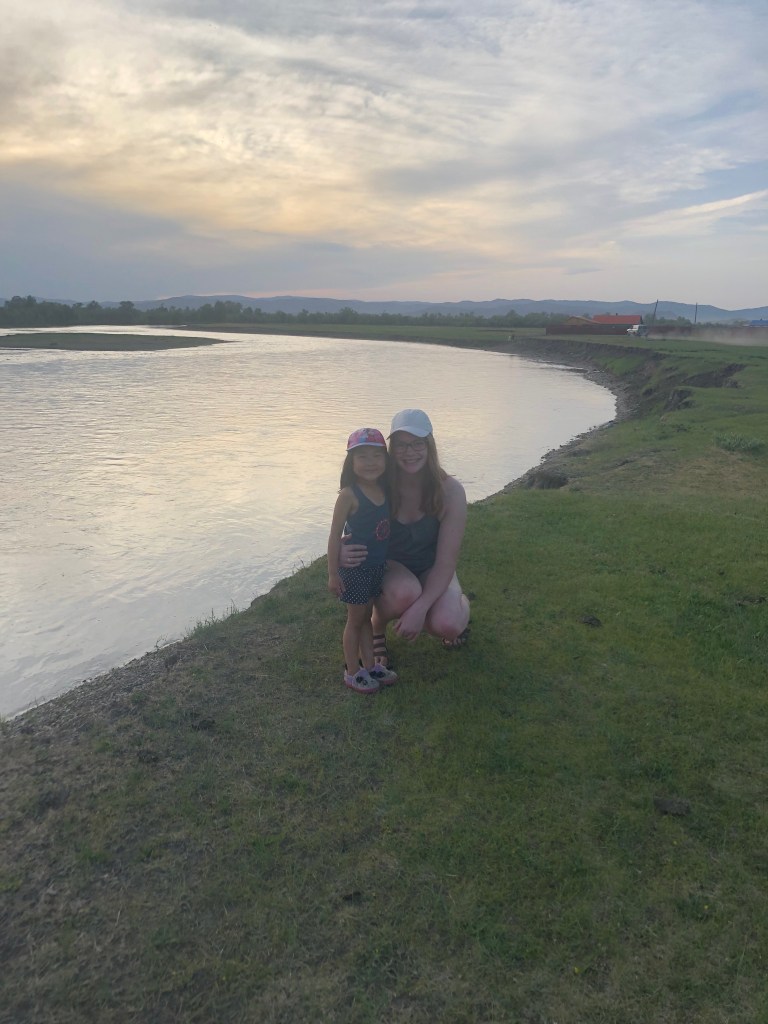
It’s tough to be on the same page with a family from a different culture, but it happens all the time for me. I was thinking about how volleyball is such an important sport to Mongolians (I know, I got really lucky with where I was placed), and I thought it was weird that my family didn’t own a volleyball. The next day, they came home from a shopping trip with one. One night after dinner, I thought about how beautiful the sky looked and how I’d like to go for a walk to the river to watch the sunset. My host aunt came into my room minutes after dinner to ask me to go to the river (this is something we should do often, but rarely do). On a hot afternoon, I was thinking how great it would be if I could at least dip my hair in the river water to cool down. The movie my family and I were watching ended shortly after this thought, and my host mom announced we were going to the river to swim.
The truth is, the mere fact that we are all humans already gives us so much in common. Everyone needs food. Everyone needs to cool down on hot days. Everyone enjoys beautiful things. Everyone likes to have fun. It’s not always that simple, but the moments when it is… they’re enlightening. Rejuvenating for every moment of frustration and confusion. Many Peace Corps blogs that I read before leaving mentioned the need to celebrate the little things because they’re what you will cling to when things get difficult. I get it now. There are nights when I am sitting at the dinner table as my host family has a conversation, and I don’t understand a word of it. There are times when I want to simply ask, “What did you do today?” or “What time is dinner?” and I can’t sift through the hours of language lessons in my head to come up with the right words. It’s frustrating and isolating, but every little positive moment makes up for these negatives, and then some. The extra ankle bones, the hidden apples in laundry, and the impromptu river walks… they remind me of the moments when my dad would purposely make perch for dinner when he knew I was coming home from Lakeland that night, or the old fashioned waiting for me on the counter (garnished with two cherries, of course). It’s about the extra peach cobbler waiting in the fridge, non-verbally reserved for me, or the jar of salsa tucked into a jacket I asked for after a volleyball game at Lakeland (accompanied by a bag of multigrain Scoops chips, of course).
These beats of unasked-for kind gestures are universal in families. They’re apart of what makes loving your family so easy. They’re apart of what already has made this experience worth the leap.
So, why did I decide to join the Peace Corps?
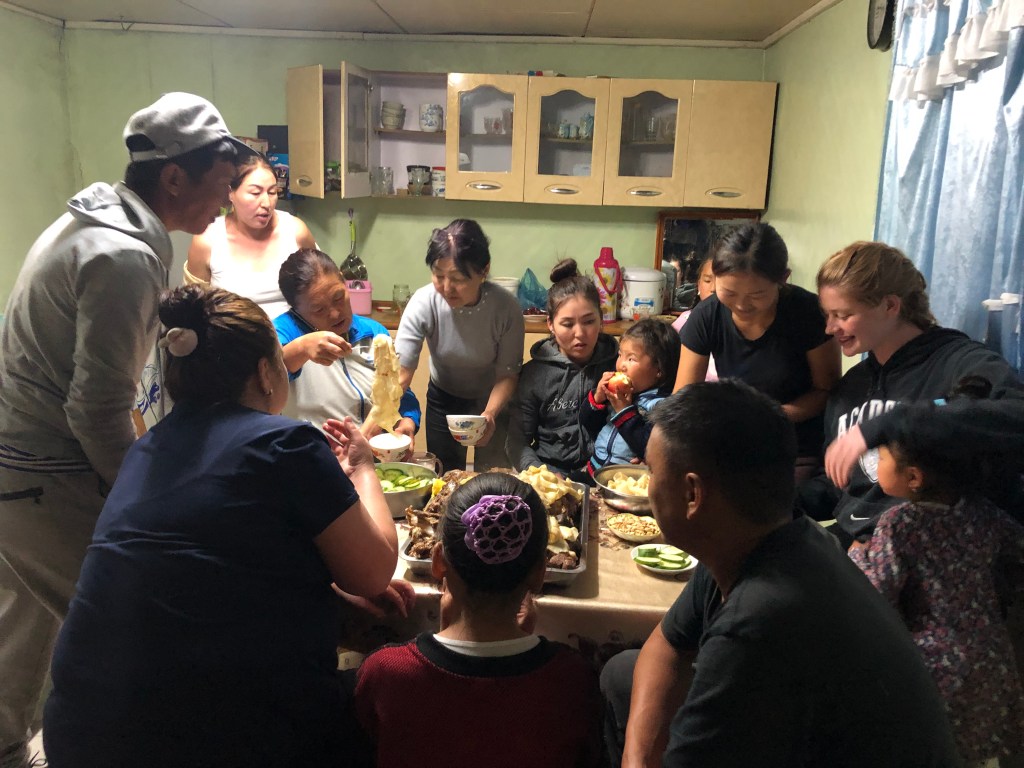
To find apples in my laundry.
Emilie
 A Peace Corps Journey: Mongolia Edition