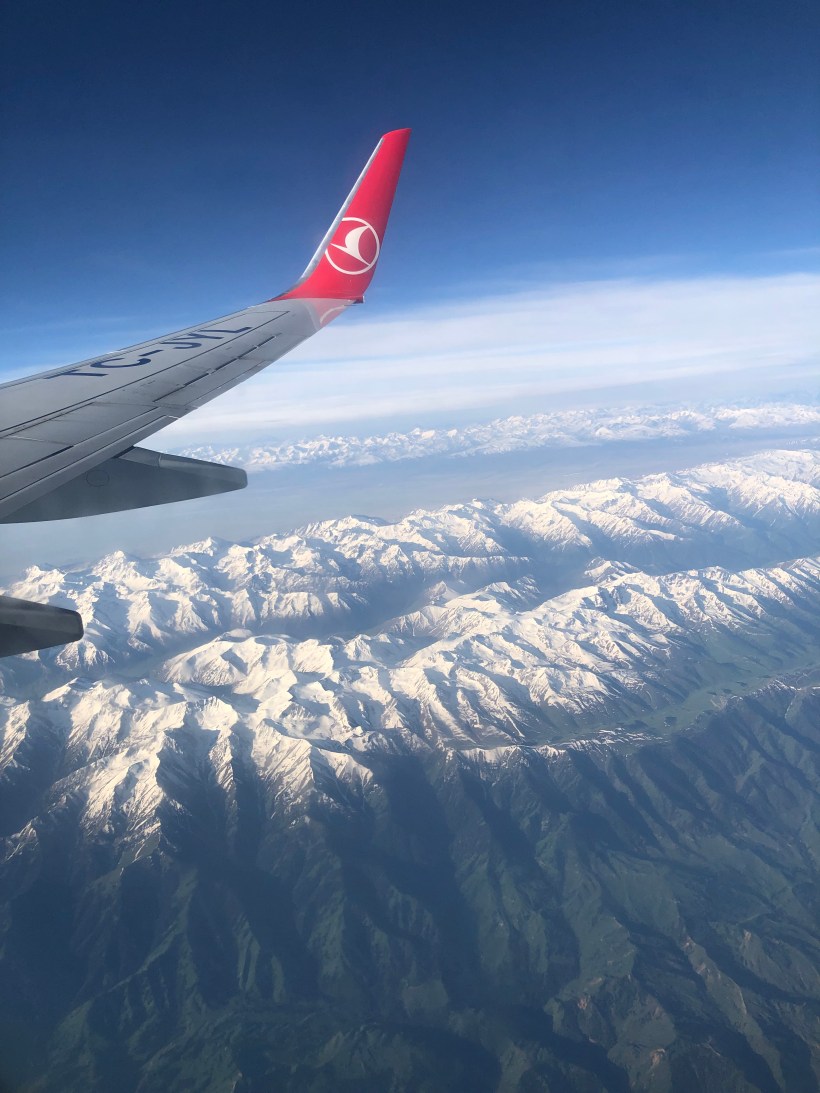
My Evacuation Story

Hello, again!

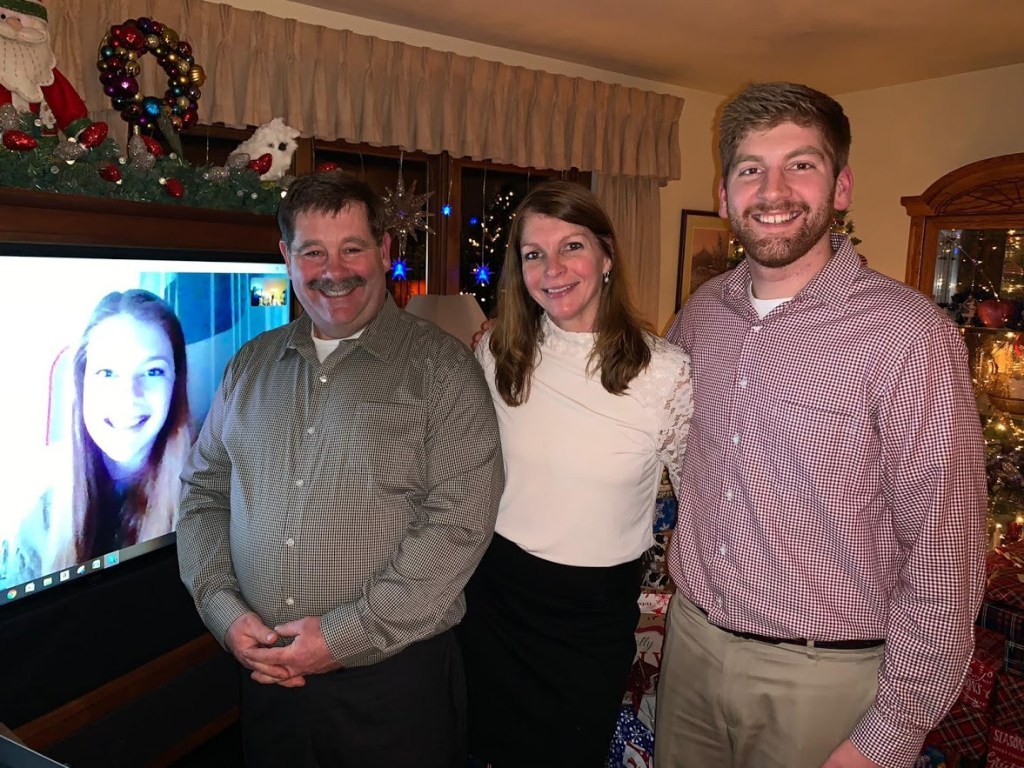
I know it’s been about 5 months already since I left Mongolia, but I guess I am finally ready to share another one of my absurd stories. As many of you saw from the video I shared on Facebook when I came home in March, my coming home to the US was a surprise for my family! Only my brother knew, and he helped me with the details. I’ll start the story on February 26th–the day we were notified that we would be evacuated from Mongolia.

Mongolia had closed schools for over a month now due to COVID-19 and the flu. In order to stay busy and sane, I chose to visit a different city–16 hours’ worth of travel away from my city–to see one of my friends and hang out as we waited to have more work to do. We had been there for nearly two weeks. Rumors were floating around that we might be evacuated, and things became serious once South Korea closed their borders. Or exit routes were dwindling–if we didn’t leave Mongolia soon, Peace Corps might not be able to get us out at all.

On the 26th of February, we received an email from our country director that we would in fact be evacuated. Pack your go-bags, and be ready to be picked up within a couple of days, was essentially what the email said. Because I was in a different city, I did not have the opportunity to go back to my apartment and pack, but these rumors had been around for a while, so when I packed to come visit this friend, I made sure to bring everything important with me–my passport, computer, and even my American credit card and driver’s license. Little did I know, today, as I write this, if I hadn’t brought those things with me that day, I would still be without them!

We were picked up a couple days later by two Peace Corps hired drivers in large Jeeps. There were 11 PCVs in the city at this time, so it was easy to consolidate and fill up two vehicles to be driven to the capital.

Mongolia is very spread out, and travel was particularly difficult during this time because the roads were actually closed, but Peace Corps was able to make an agreement with the Mongolian government to allow these Jeeps to drive all over the country to collect us and bring us to Ulaanbaatar. The ride was long, jam-packed, bumpy, and… scary. We got lost multiple times (while off-roading… that’s a whole other story in itself–but to put it short, once it got dark, or drivers were stopping frequently to get out and use the stars to guide us in the right direction!). 14 hours later, we were dropped off at our hotels. After figuring out who was in what room, we had a brief meeting about the fact that we would be here for probably at least a week, go to the Peace Corps office for meetings each day, and essentially have to entertain ourselves the rest of the time. This sounded great to me. It felt like a vacation!

The reason it was exciting is because the next day, we were told that there would be a good chance we are coming back soon. We would be on Administrative Leave, meaning we would go home, get a little living allowance from Peace Corps in the meantime, then come back in a couple months once everything had quieted down. Seems pretty silly now, doesn’t it? It’s August, and things have most certainly not quieted down yet. However, at the time, COVID had barely made it to the US. We had no idea what the world was about to go through.

After a week of meetings, saying goodbye, getting my first tattoo, and doing a LOT of eating out and shopping (we had to use up our Mongolian money before leaving!), it was finally time to board a plane. This entire time, I was telling my parents that this plane would take me to Russia where we would all hang out at the US embassy until we were allowed to return to Mongolia (LOL… so sorry, Mom and Dad!). The worst part is they believed it. At a time I needed their guidance and support the most, I was deceiving them. It was very difficult to go through this drastic change without them, but I had my other PCVs and my brother to lean on. Him and I even planned out some alibis for if I was ever on a flight or sleeping when they were trying to reach me (my phone broke, Peace Corps requires us to turn our phones off while in meetings, etc. etc.).

My flight schedule was difficult. I would go from Ulaanbaatar to Moscow, Moscow to Berlin, Berlin to Frankfurt, Frankfurt to Chicago, and Chicago to Madison, where Riley would pick me up and bring me home. It was going to be brutal, I knew that, but there was no way to know it would be as horrible as it was.

The first “issue” occurred in Moscow. I had never received a second boarding pass in Ulaanbaatar, so when we got off the plane in Russia to go through security again only to get on the same plane and continue on, I didn’t have a boarding pass for Moscow to Berlin. I was sent to a little corner of the security check area to be dealt with, similar to a few others who were not allowed on the plane yet. I eventually was able to convince the Russian airport security with a screen shot on my phone that I was in fact supposed to get back on the plane. It was extremely stressful because we did not have a lot of time to get through the check and back on the plane in the first place.

The next “issue” occurred of course in Berlin, the next stop. We barely made it on the plane in time (the kiosks wouldn’t give us our tickets because it was too close to the departure time…?), only to sit there for an hour waiting for a computer malfunction on the plane to be fixed. Once they decided the fix could not be made with the passengers on board, we got out and waited in a baggage claim area for about another hour. Finally we re-boarded. This time seemed less hectic and more hopeful. Man, was I wrong. The minute we all got back on and seated, the computer problem began again. After some time, there was an announcement that the flight was now just totally cancelled. Very very frustrating.

Back to baggage claim we went. I only had a carry on, so I considered going off on my own to try to catch a different flight going to Frankfurt, but that plan made me feel uneasy. It was almost better to take longer, but go through it with the other PCVs being evacuated than try to go off on my own and potentially fail anyways. So, I sat with everyone as we all waited for their luggage.

An hour later, we were told that the luggage would not come. They had to go get a new boarding pass and talk with someone to get their luggage out of airport storage (unfortunately, this ridiculousness actually happened). After standing in line for new boarding passes for another hour or so, we finally were told that there would be no more flights to Frankfurt today. They gave us a hotel and food voucher, and then sent us on our way.

I ended up being roommates for the night with a fellow PCV who was my yurt roomie during our very first week in Mongolia. The situation was very full-circle feeling. We ate, showered, and attempted to sleep for a couple hours, but we had to leave for the airport by 4 AM, so it was more like a nap. If you know me at all, you know I hate naps, and I always wake up feeling worse. Unfortunately, even after about 30 hours of travel and being utterly exhausted, this time was no different.

Although it was safe to say I missed my flight from Frankfurt to Chicago, the fresh start made me feel as if my bad luck was over, and I would have a full day of successful travel ahead of me. Once I finally got to Frankfurt and boarded my flight to Chicago, I was feeling insanely excited. I couldn’t wait to take off and enter the US.

Turns out I had to wait… and wait… and wait. For three hours to be exact. A woman got sick and needed to get off the plane, so they also had to get her luggage from underneath. I decided I would accept wine from the beverage cart for the first time this entire trip. Some things are just necessary for travel, especially bad travel.

When we finally got to Chicago, my spirits were lifted again. I was on American soil, and very close to being in Madison with Riley. I got my new boarding pass, obviously for a later time and contacted Riley to make sure he was still ready for me.

The Wi-Fi wasn’t working, so I was not able to reach him at all (I did not have a phone plan in the US anymore). I ended up having to go to a United Airlines help desk, which turned out to be one of the better decisions I’ve made. Two people were there, and they were both eager to help. The woman dialed Riley’s number, and when he didn’t answer and I began to panic because I didn’t think he would answer an unknown number, she assured me that if he was anything like her, he would answer the second time the number called him. Thank goodness she was right.

Turns out, my beloved brother had already departed Madison and was leaving his long lost sister in the dust to go home on his own and enjoy a nice perch fry with our parents that night without me. Or… at least that is how hearing this news felt to me after about 45 hours of traveling. I was insanely pissed at him. WTF was he thinking?!

The nice lady said that she could exchange my ticket to Madison for a ticket to Green Bay. It wasn’t until 8 PM that night though, so Riley told me to get a hotel in Green Bay, and he would pick me up in the morning. This guy was full of all sorts of ideas, wasn’t he? As calmly as my sleep, food, and water deprived self could dictate, I informed him that another f*cking hotel was not in my future for tonight. He seemed to catch my drift and offered to come to Green Bay tonight once my plane landed. It wasn’t a super ideal plan, but it was a plan.

I told him I would call him back once I figured out the Wi-Fi and left it at that. About 20 minutes later, I got it to work and told him that I would call again once I visited the restroom and got some water, so that we could continue to brainstorm. Clearer thinking tends to happen once I get some immediate needs met.

After washing my face, I went to fill up my water bottle. With my back turned to a completely random gate, I heard four magical words, “Now boarding Appleton, Wisconsin.” At first my reaction was casual. I thought, “Damn. That would have been a really good idea.” Then I thought, “Do I have time?” Immediately, that evolved into, “CALL RILEY.”

“Please tell me you came up with a better plan,” Riley said when he answered the phone. I was so shocked that I had, in fact, come up with a better idea, that I couldn’t even spit it out. “I…the announcement…I think I can try to get on a plane to Appleton! Should I do it?”

“GET ON THAT PLANE” was all he said before I hung up. Hands shaking, shocked that I was doing something so spontaneous, I walked up to the counter and essentially told the lady that I know it’s crazy to try to get on a plane that is currently boarding, but could you pretty please honor my boarding pass to Green Bay and let me on? She typed… and typed… and typed… then printed a new boarding pass. Her only words to me the entire interaction were, “Enjoy your flight.”

Hysterical at this point, I called Riley. With tears in my eyes and my voice a little too loud, I told him that I would be in Appleton within the hour! He informed me that he, too, would be entering Appleton within the hour. People were staring at me because they had heard my initial call to Riley about potentially trying to get on this plane, and I think they were just as shocked as I was that I was now getting on the plane. A few people smiled at me. They enjoyed the particularly dramatic scene I was making. I could not care less. I went from being home somewhere around midnight to potentially being home within a few hours. I let the tears come.

As promised, he was at the Appleton airport waiting for me. We drove the last hour and a half leg of my approximately 50 hour travel home. He dropped me off at the end of the driveway, went in the house to say hello to our parents and grandparents, and began videotaping when I walked in.

Oops, did I say Russia??? I meant HOME. 🙂
Year in Review as a Peace Corps Volunteer

I’m not one to spend too much time looking in the rear-view mirror, but my life has changed so drastically from January 2019 to December 2019 that I feel I need to go over some of the highlights from each month. Of course, I am incredibly proud of what I have accomplished, and I am looking forward to where I go from here, but keep in mind you’re viewing the highlight reel. For every high you see here, there were more than a few lows. For every “A” earned or plane boarded, there were many late nights of studying and worrying about “What now?”

Thankfully, joining the Peace Corps was one of the best decisions, if not, THE best decision, I made in 2019, but it was also a decision that made 2019 the most difficult year of my life (so far!). I am grateful for everything that has happened to me this year, and more importantly, everything I have done for myself this year. Here’s to 2019… and an equally challenging and rewarding 2020.

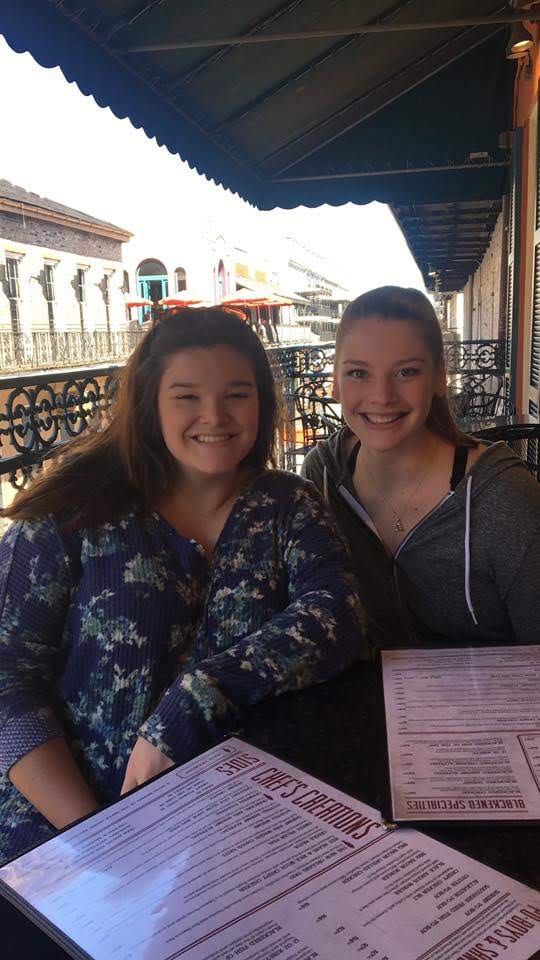
January–Planned a trip to New Orleans over winter break to meet up with friends I made in Ireland while studying abroad last year. I just had to get a little trip in before my big trip! Even in New Orleans, I was taking phone calls from doctor appointments trying to get my paperwork for Peace Corps done. I’m still waiting on these two to come visit me in Mongolia…
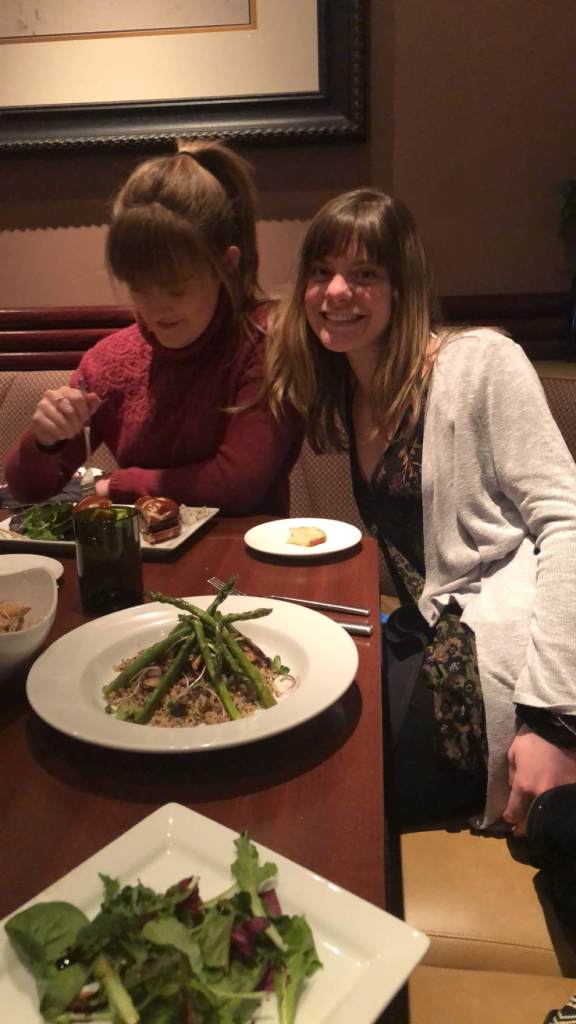
February–Not the best picture, but I spent a lot of time with friends… these two I met a summer ago while working in DoCo. The closer I got to finishing the Peace Corps paperwork, the more time I felt I was losing with my friends. Still waiting on their visit to Mongolia, too…
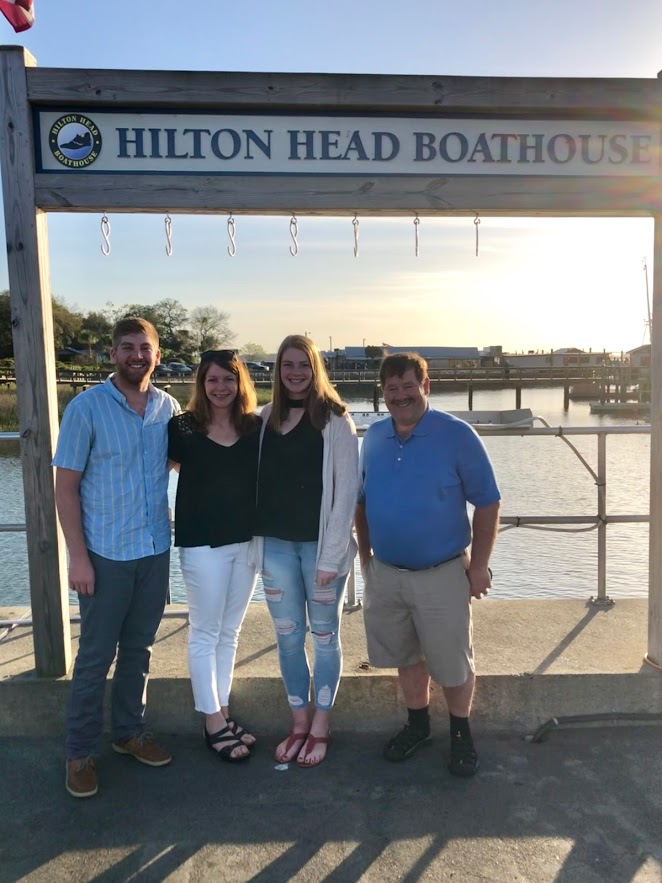
March–Spring Break with my family to South Carolina. We stayed on Hilton Head and visited my cousin who was going to school there, too. It was a good break from my last semester at LU, although, I’ll admit, I did spend some time studying on the beach…
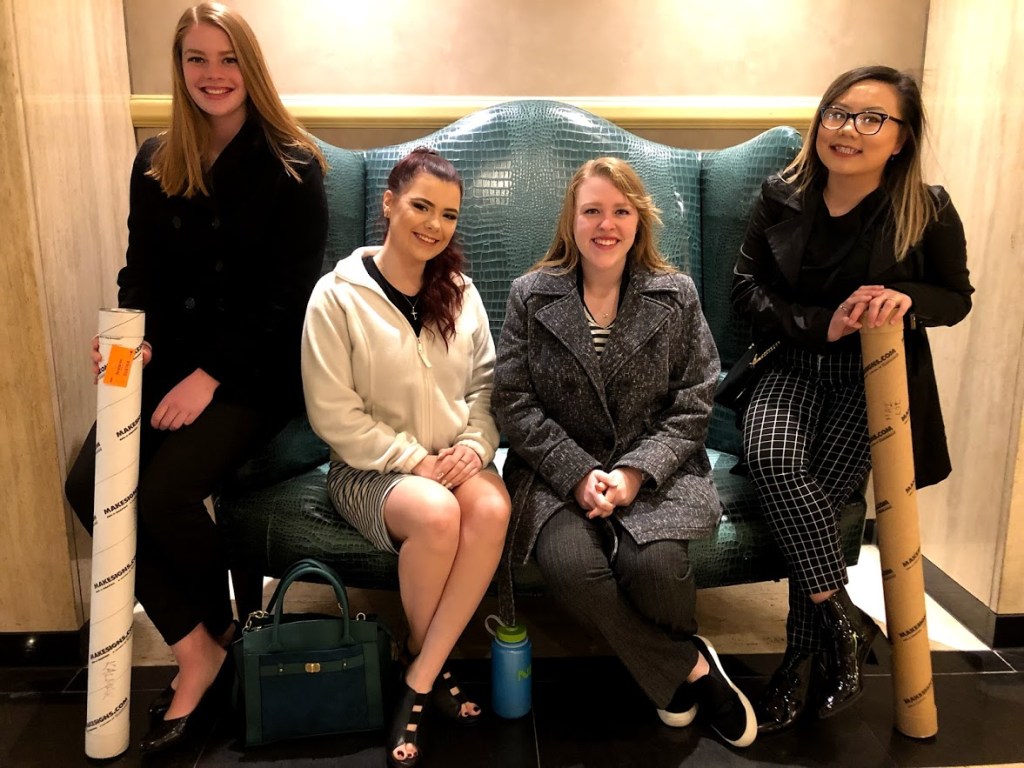
April–Hard work pays off! Both my poster and Mai’s poster were accepted to be presented at the Midwestern Psychological Association conference in Chicago. We had a great three days of presenting our research, exploring Chicago, and even watched Hamilton.
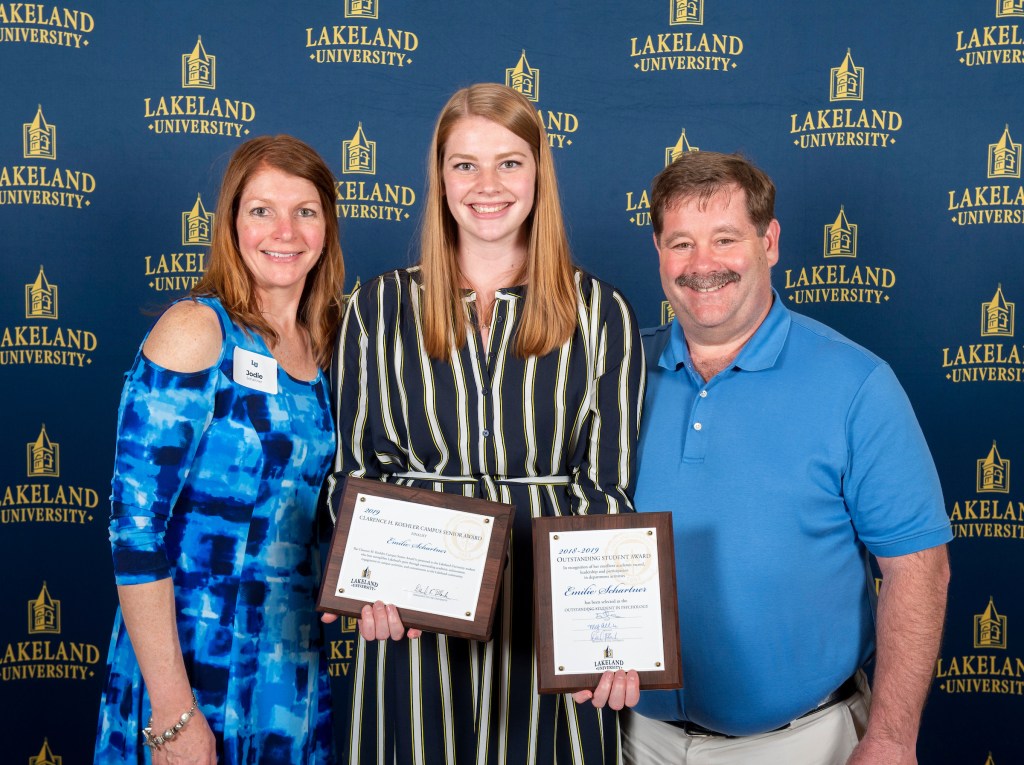
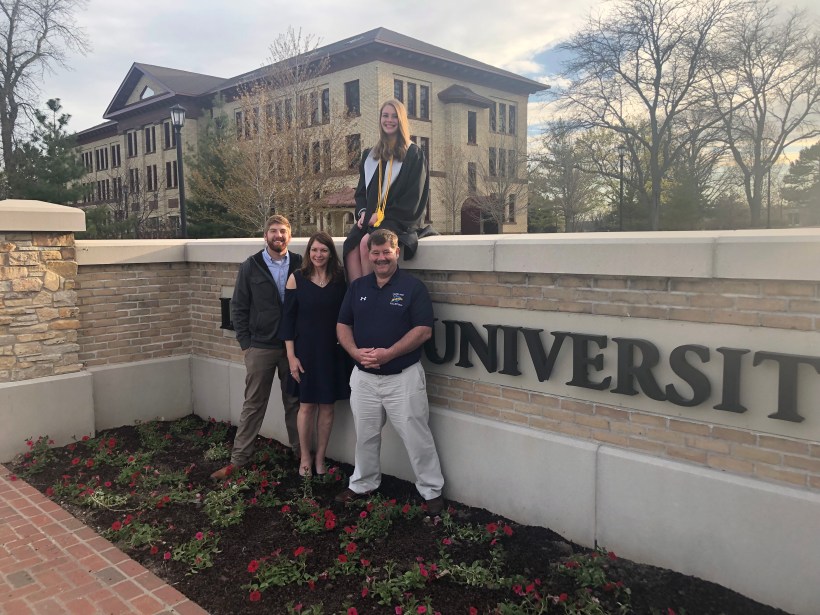
April–At the end of the month, my parents joined me at LU for an Honors Banquet where I was a finalist for the Koehler Award and received the Outstanding Student Award in Psychology. Graduation was just around the corner…
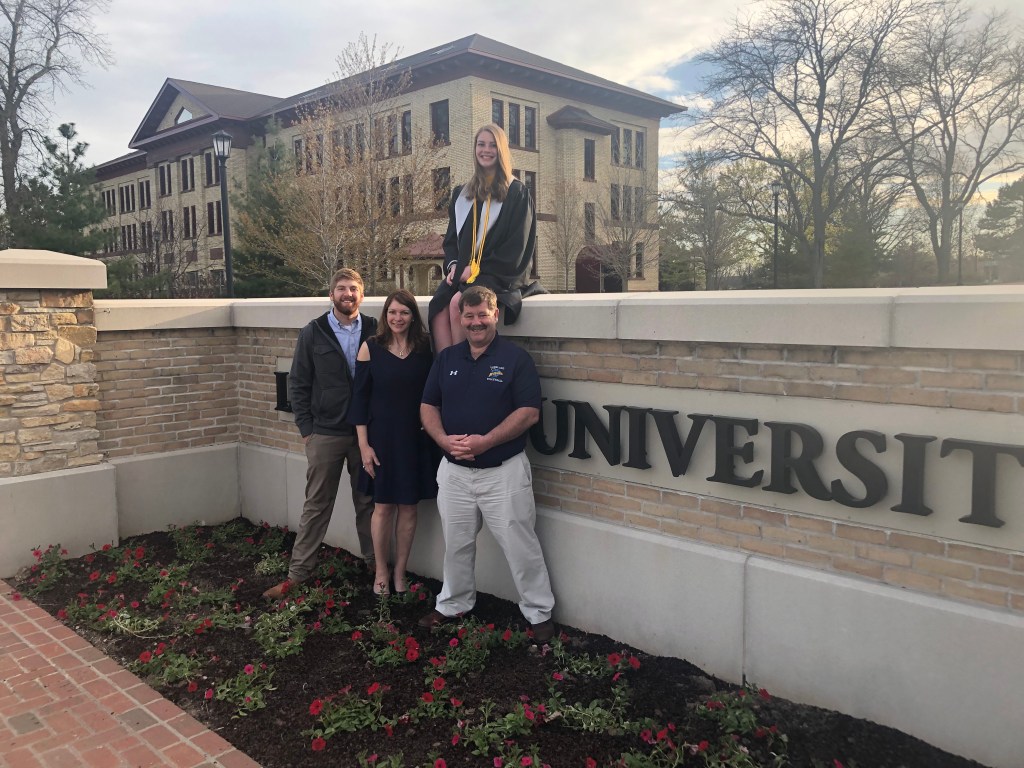
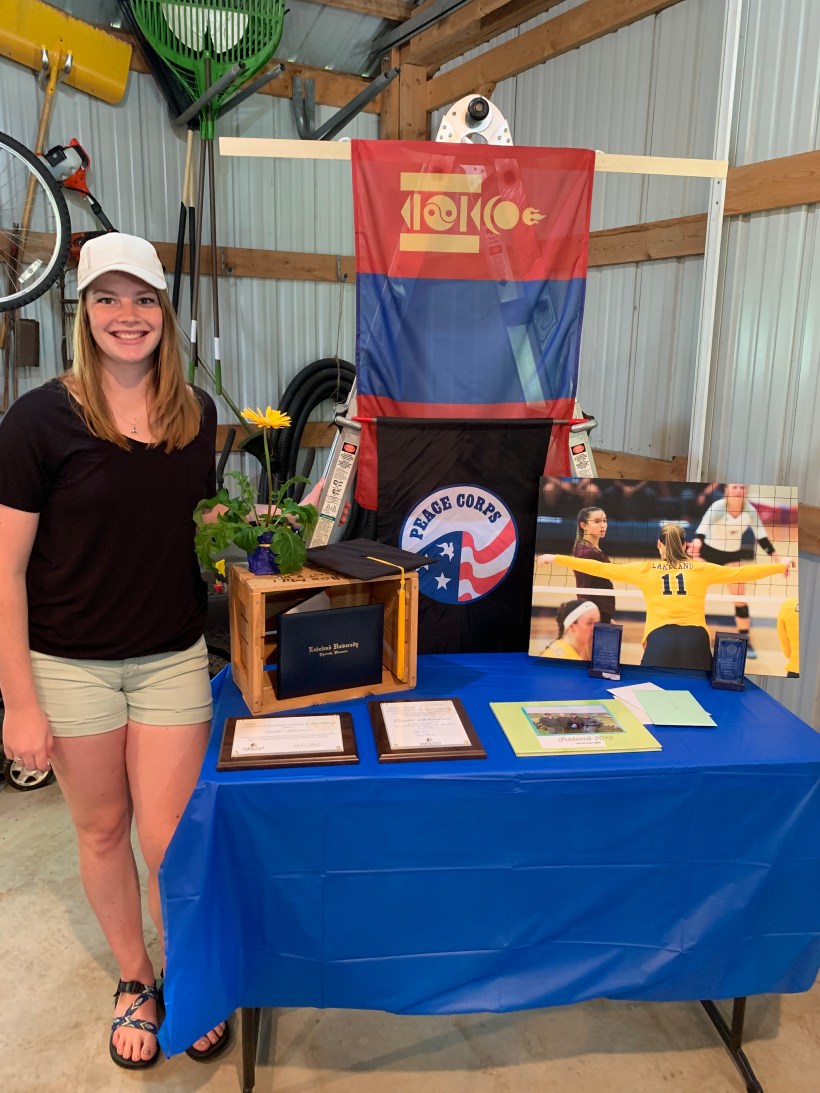
May–Graduated from Lakeland University with a BA in Psychology and a Writing minor. Ended my collegiate career with a 3.89 GPA and a ticket to Philly to begin my journey as a Peace Corps volunteer. Unreal…
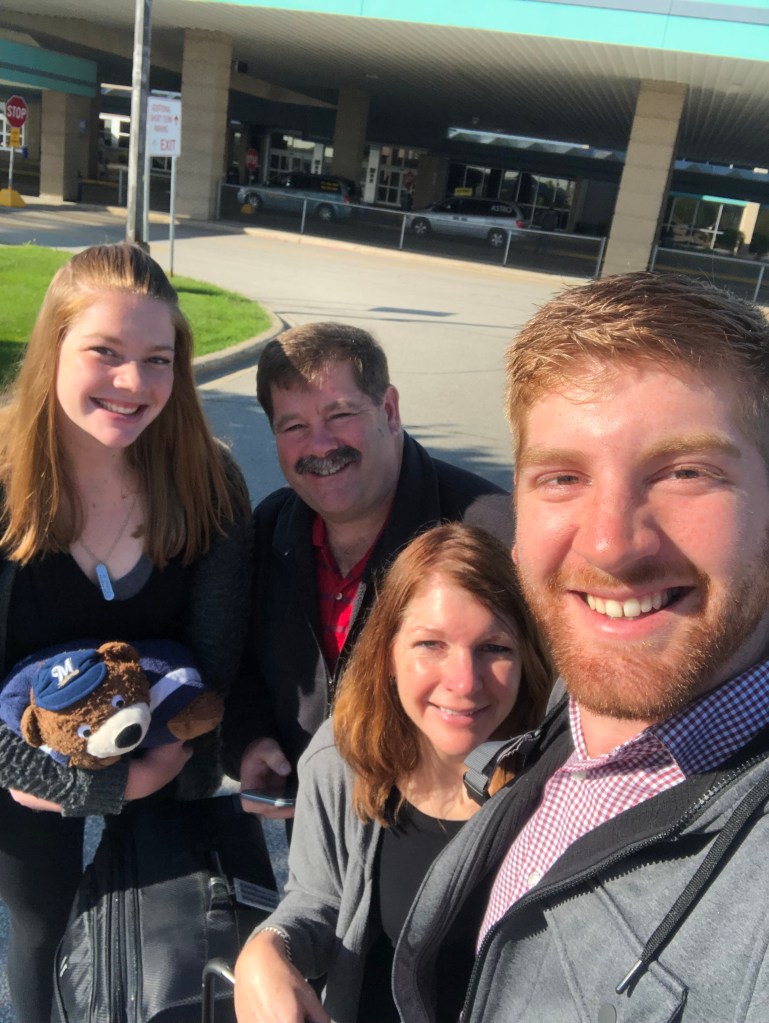
May–At the airport with my family. I can’t believe this is the last time I saw them! I flew from Green Bay to Chicago, Chicago to Philly (met other trainees there), then finally New York to Mongolia with a stop in both Turkey and Kyrgyzstan. I’m grateful to be pretty good at sleeping on public transportation.
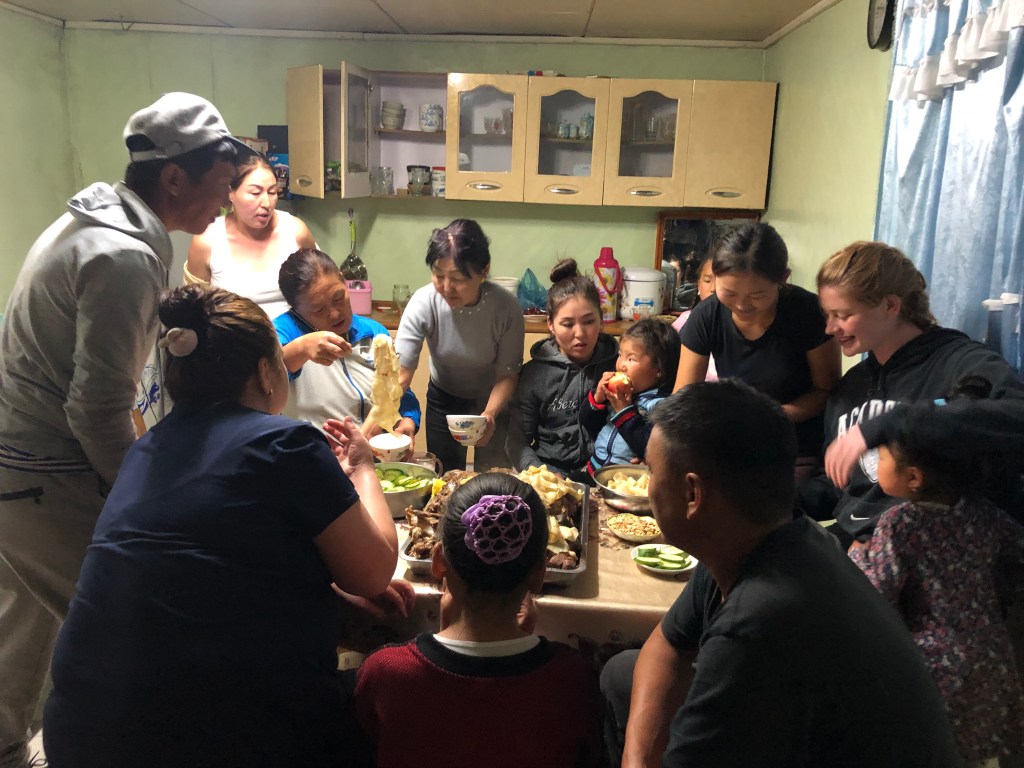
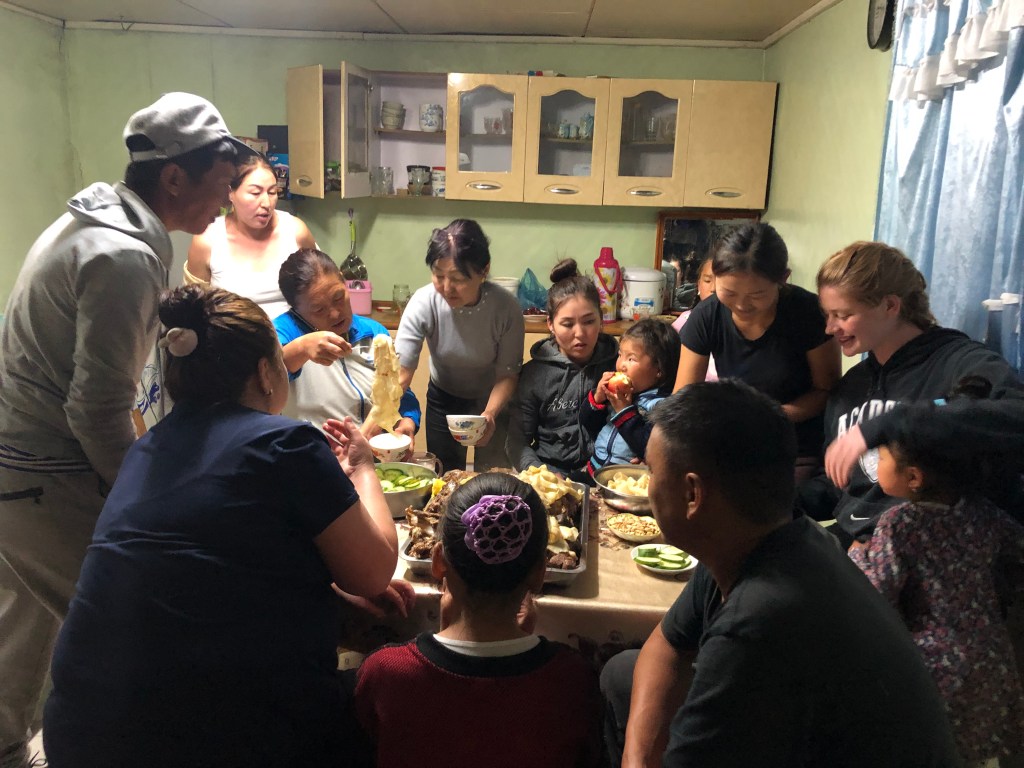
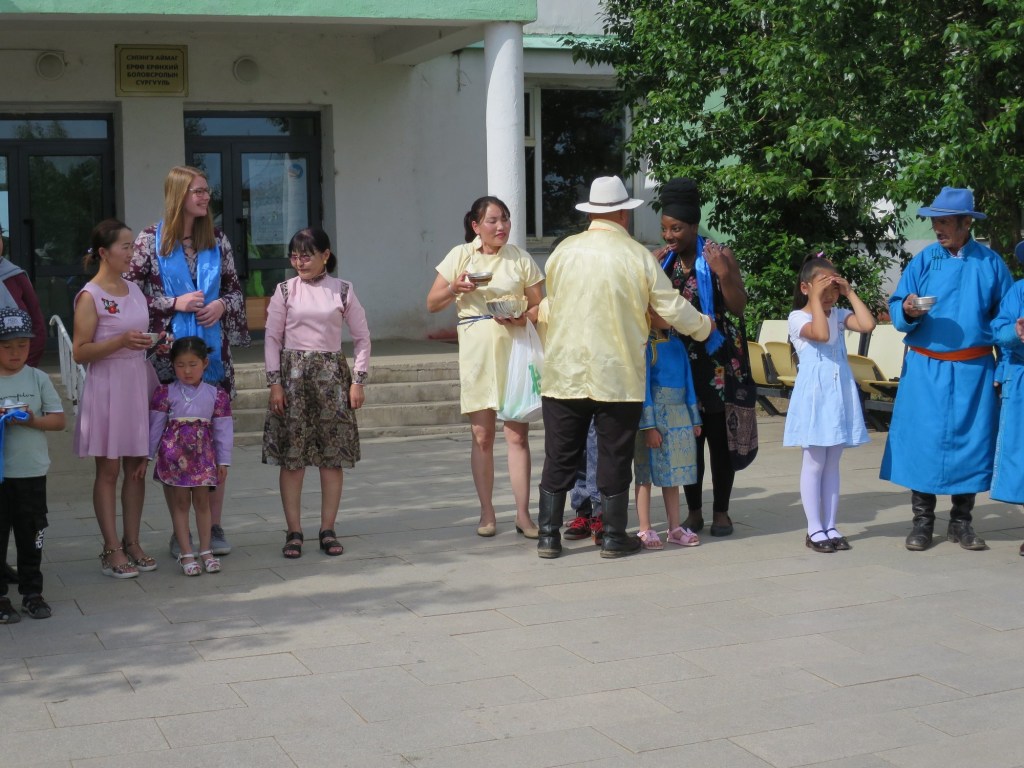
June–After a week at a ger camp for training, I was brought to a little town to live with this wonderful host family for three months. This is a photo of a traditional Mongolian meal with extended family to celebrate… me. I think. You know, the language barrier makes a few things unclear, but… I felt special!
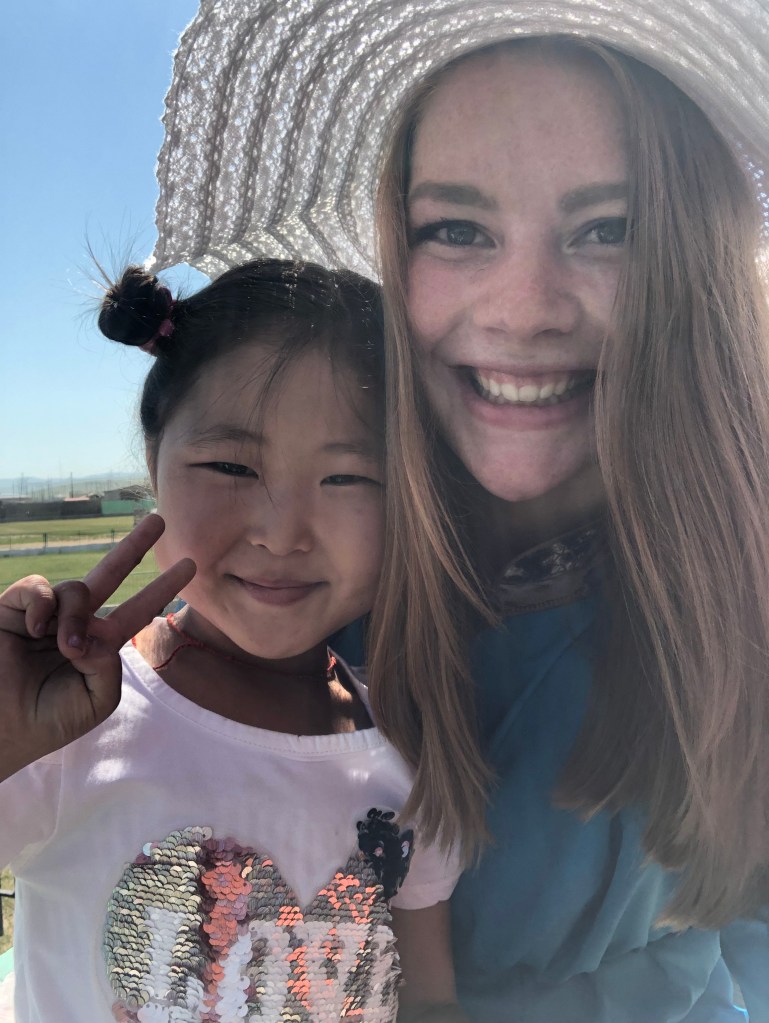
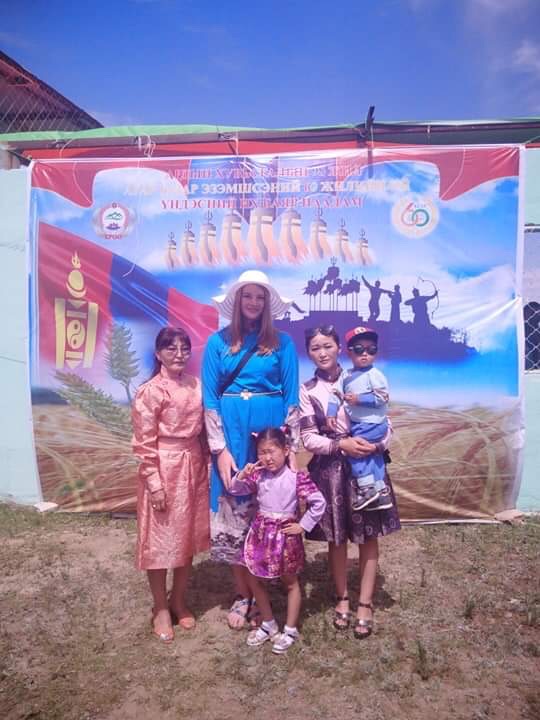
July–Celebrated a Mongolian holiday called Nadaam with my host family! This is my little sister. She was one of my main lifelines throughout those challenging three months. She always spoke slowly, showed when telling didn’t work, and played games with me. Needless to say, I miss her A LOT!
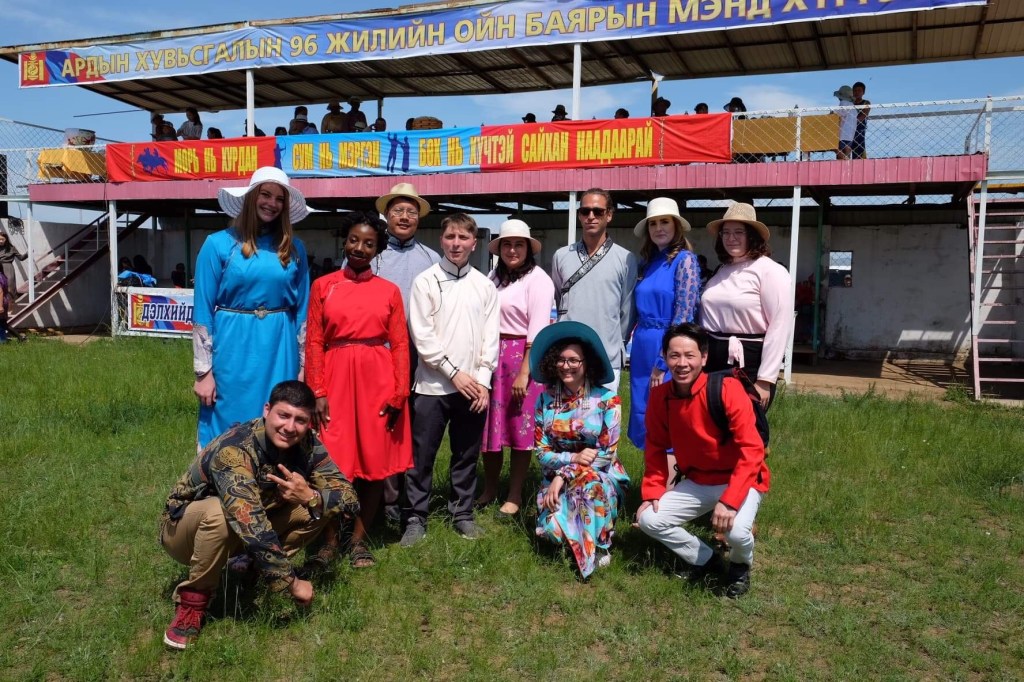
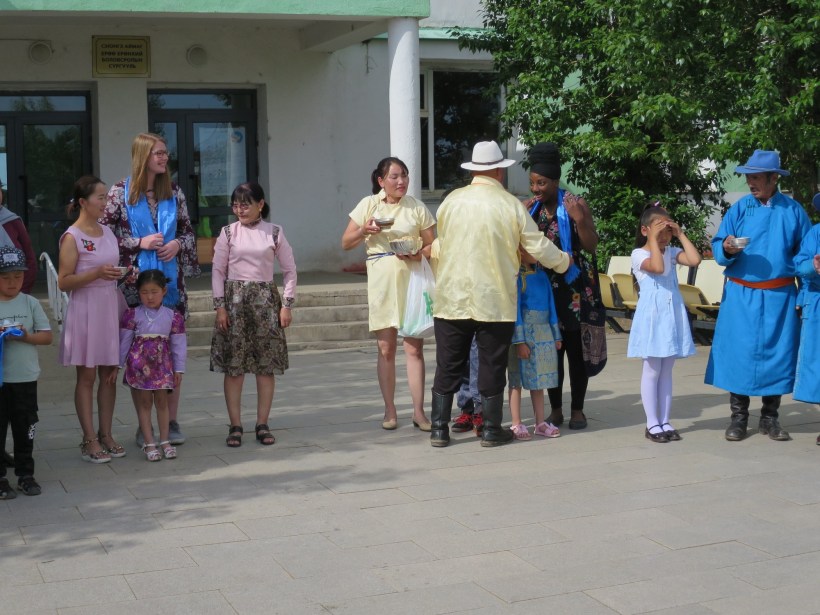
July–Nadaam continued with the Peace Corps crew. We all wore traditional Mongolian clothing and enjoyed watching wrestling, archery, and horse racing.
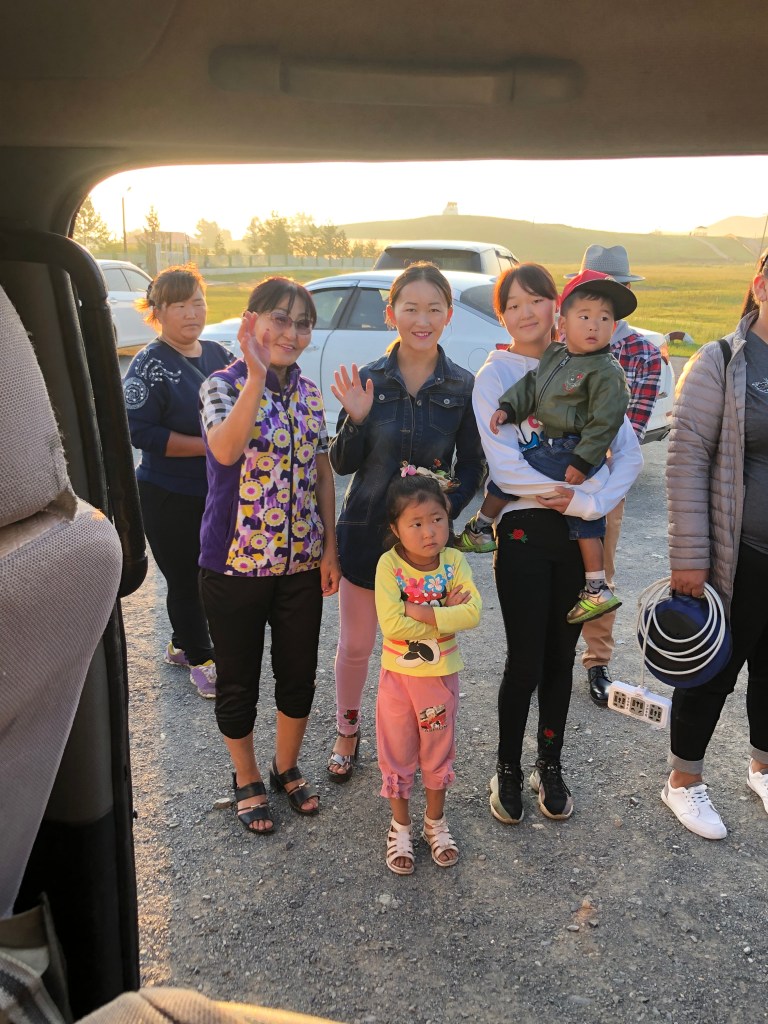
August–Said goodbye to my host family… This was the last time I saw them, but I am currently planning on visiting them soon! I went to Mongolia’s capital with all other Peace Corps volunteers where we had a couple more days of training before…
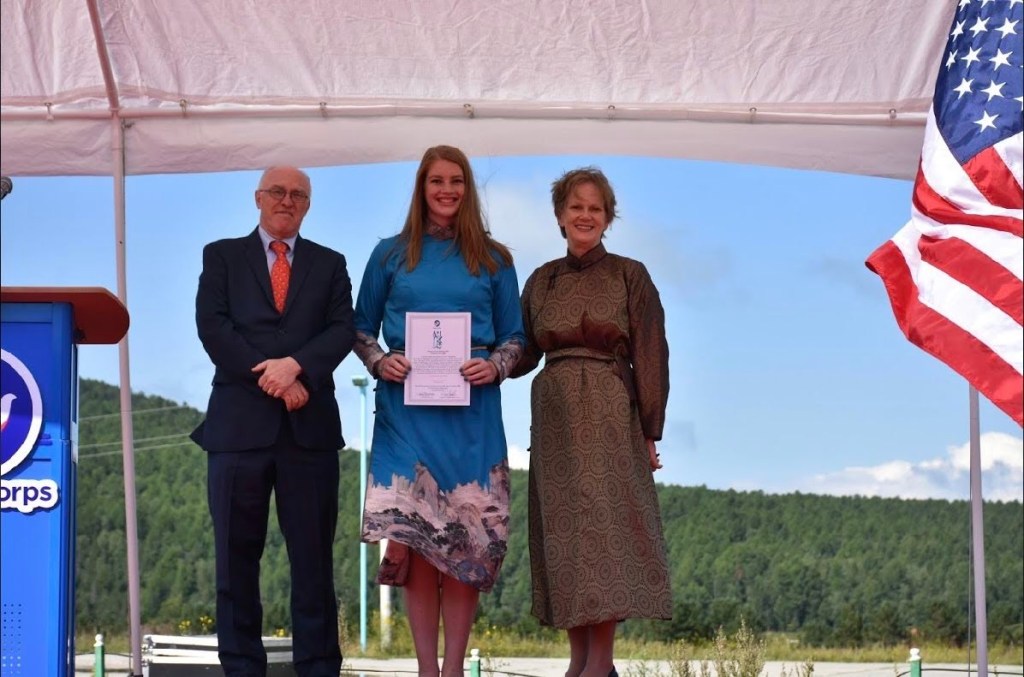
August–Swearing in! This is when I officially became a Peace Corps volunteer and was told where I’ll be living for the next two years.
Pictured: Left side: US Ambassador to Mongolia, Michael Klecheski
Right side: Peace Corps Mongolia Country Director, Kim Mansaray
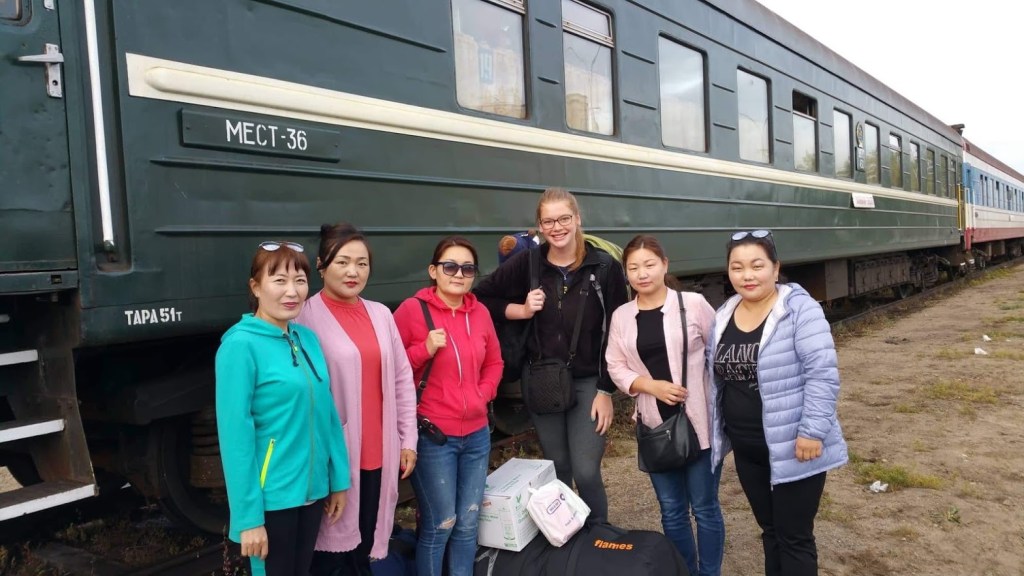
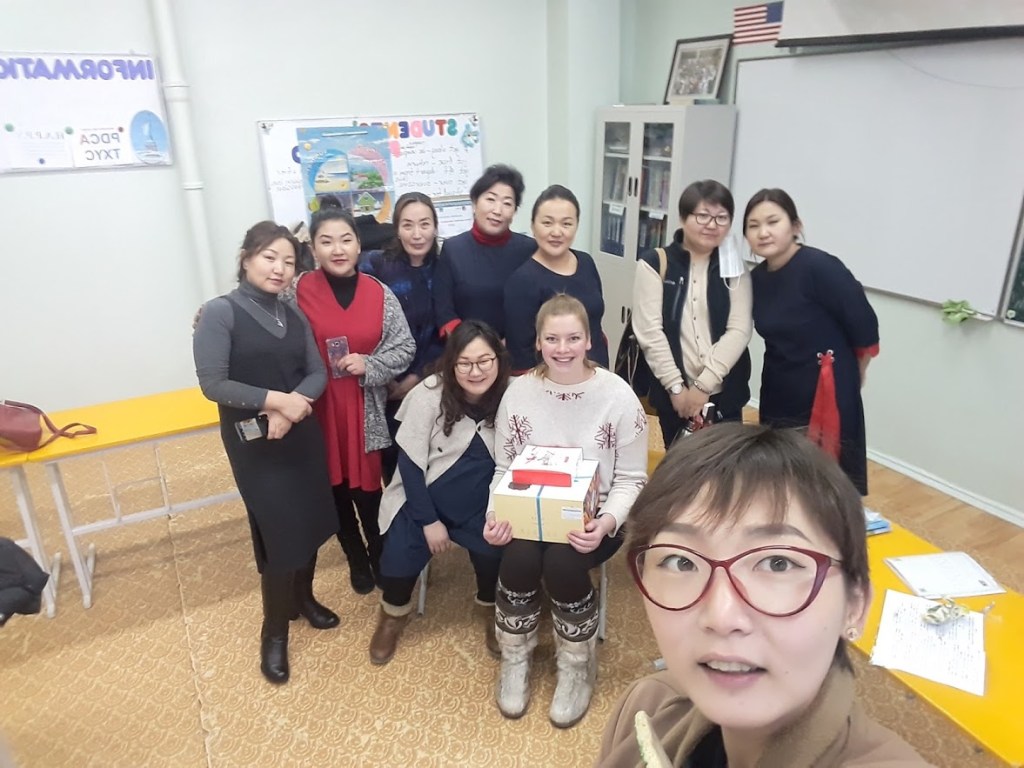
August–The moment I got off the train in my new home, I was welcomed by a few foreign language teachers from my school! I have taught with each of them since (besides the one Russian teacher pictured here second from left), in addition to six other English teachers.
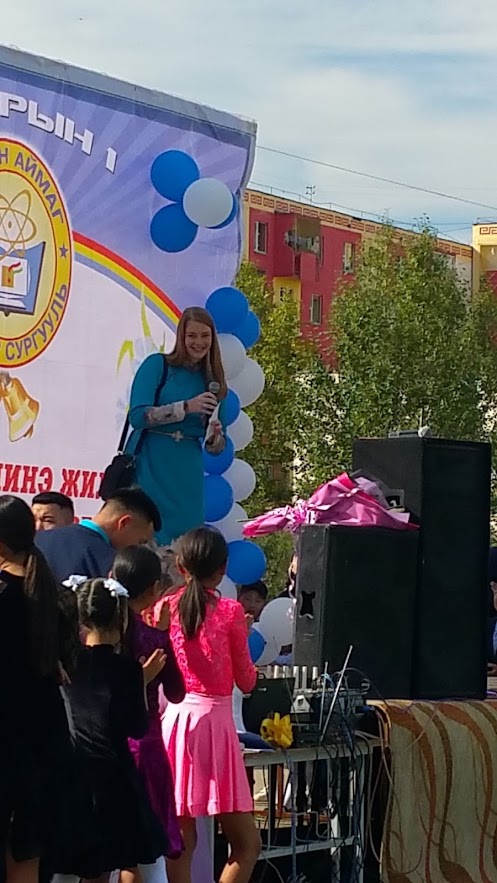
September–First day of school ceremony. It was pretty nerve-wracking doing a speech in Mongolian in front of everyone, but also a positive experience that I will never forget.
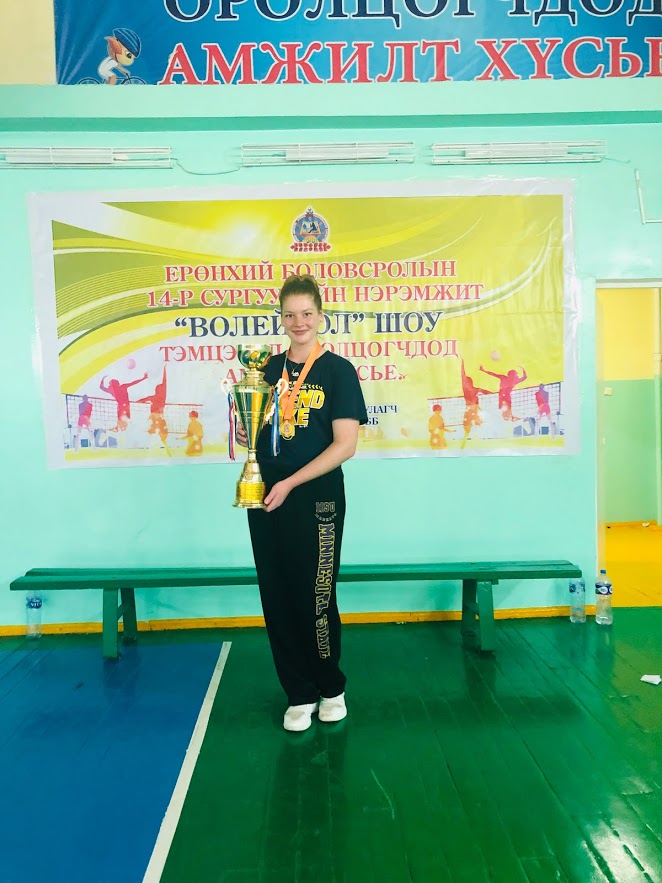
October–There was a teacher volleyball competition in my city involving about 30 schools for two (very long) days. My school’s women’s team took first place and the men’s team took second! This resulted in my school winning a trophy for the best school in the tournament!
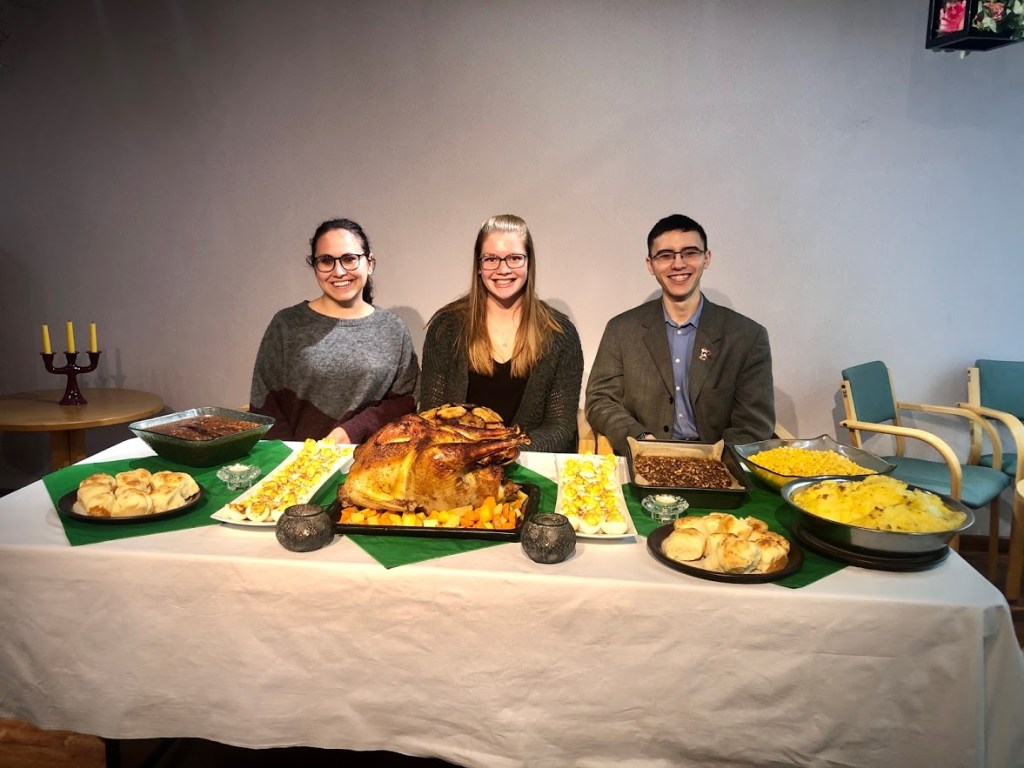
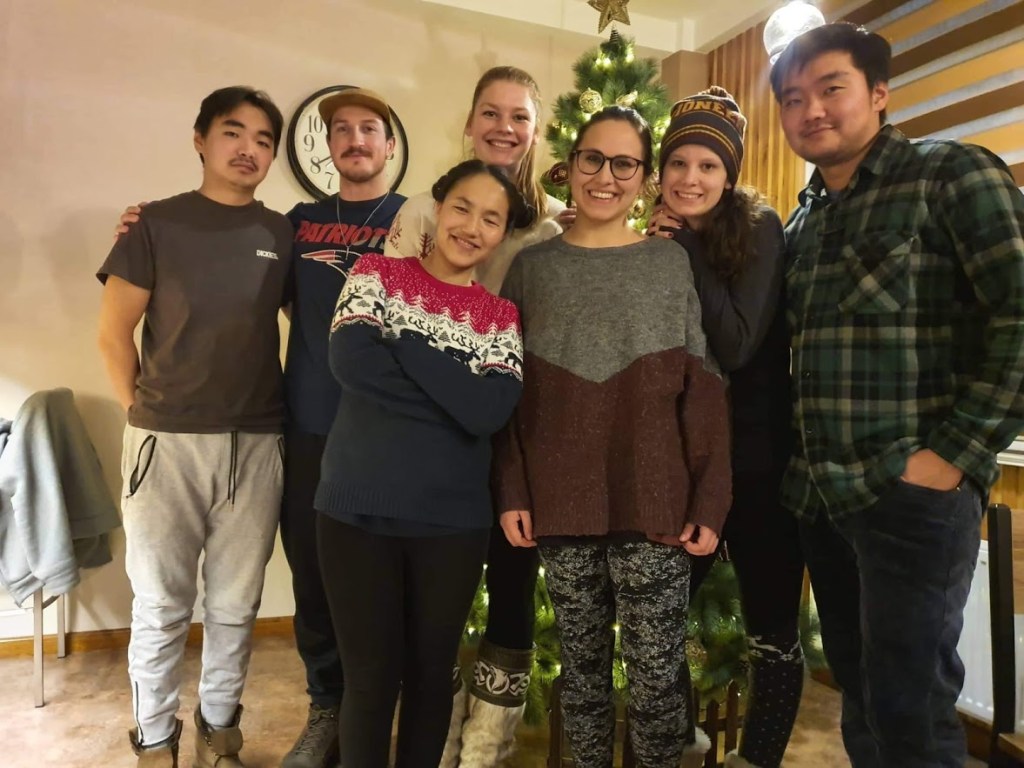
November–Thanksgiving without my family was tough, but an American couple from Oklahoma organized a traditional Thanksgiving meal that my friends and I were able to participate in (and eat, of course). It was delicious and definitely made the holiday away from home special.

What does next year have in store? Well, I am kicking 2020 off in Korea! I leave January 4th and return January 11th. I will be traveling with my German friend, Teresa. Pictures to come. 🙂
Happy Holidays to everyone at home! I miss you all. ❤

Emilie

Becoming a PCT

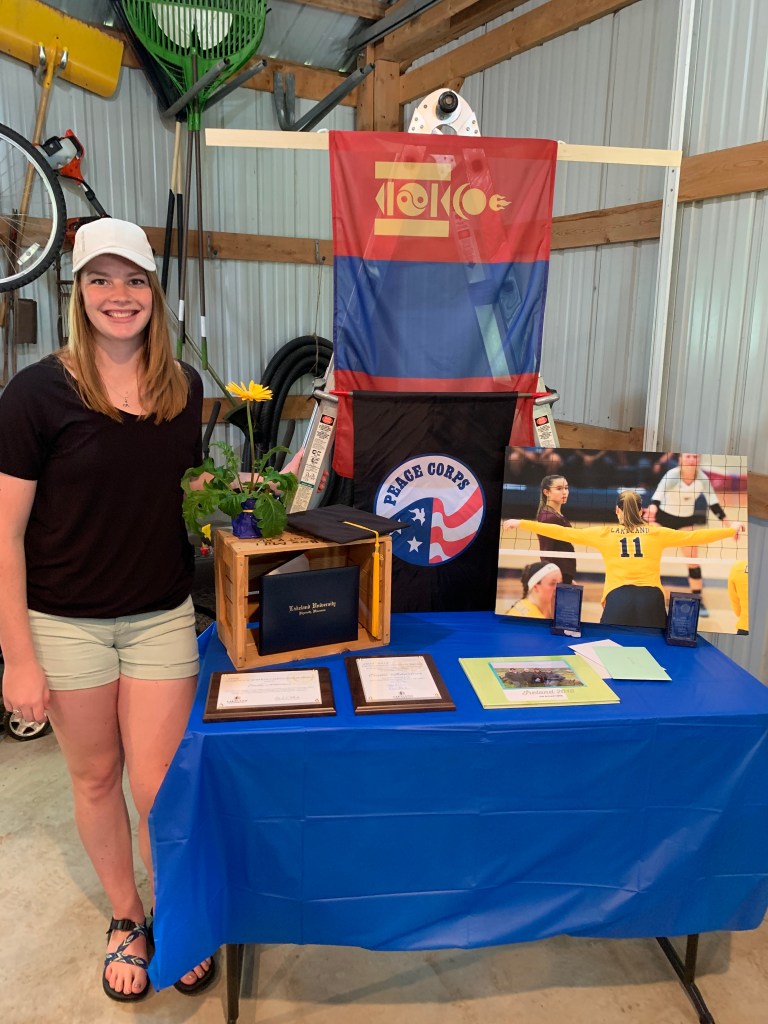
Going-away party

I wanted to begin my first post with landing in Mongolia as a Peace Corps Trainee (PCT), but the journey began so much sooner than that. In case anyone who is reading this is considering becoming a PCV at some point, I just wanted to briefly touch on the whole application process.

There is a reason why the Peace Corps has a wonderful reputation: It is competitive and thorough with an amazing set of goals. As you can imagine, the application process may be a little challenging. My experience with it began simply. I applied to “where most needed” on the website. The entire application honestly may have only taken 30 minutes. Once my application was under review (only weeks after submission), it was only another week or two after that when they asked me to signup for an interview. It all went very quickly. I hardly had a chance to inform my parents that I applied to the Peace Corps before I was signing up for an interview (“Just for fun!” I told them…). It was a day and a half after the interview that I received an invitation to serve in Mongolia. Given only three days to accept, I called my best friend to tell her I would not be able to stand up in her wedding in October, gave my parents one last chance to talk me out of my crazy idea (they respectfully gave me the “we support your decision” bit), and then I checked the little box in the email that read, “I accept.” From that point on, “simple” quickly turned into “stressful.”

Again, you can imagine the detailed information an organization who is paying to send you to the other side of the world might want. I had doctor, dentist, and eye appointments. I sent in my fingerprints for a background check. I filled out aspiration statements, completed readings and quizzes, and eventually dealt with banking, insurance, and booking the flight through the Peace Corps travel agents. In between these tasks and working towards finishing my schoolwork to earn my diploma, I was learning Mongolian through the app and website the Peace Corps provided. It was a lot. For anyone who was not 100% committed to serving, I doubt there was a finish line. As I sit in my ger (yurt) in Mongolia, officially a PCT nearly finished with her orientation week and about to meet her Mongolian host family in less than 48 hours, I can tell you with incredible certainty: The process is worth it.

I breezed through many details, so please contact me if you’d like any more information on the process! Please keep in mind that this is my personal experience–many other PCTs I am with have their own unique “jumping through hurdles” stories they could give you.

I want to end with a conversation I had with a fellow PCT the other day. He was wondering why I made posts on social media telling everyone where I was going and what I was doing. In his case, he joined the Peace Corps strictly for him and those he would serve, no one else. It was a precious journey that he was committing to. It did not involve anyone else, and he wanted to keep it that way. He felt his service was more important if it remained off of social media. While I completely understand and support his decision, I tend to see it a little differently. I want as many people as possible to know about Peace Corps. I truly admire their goals and aspirations, and I am humbled to be apart of it. If my advice, stories, pictures, etc. can inspire others to turn their “I wish I had done that” into “I’m going to apply,” then I want to do that. I am excited to share my experiences along the way, and I hope you all will enjoy experiencing a bit of it too on this blog.

Here’s to “just for fun” turning into commitment.

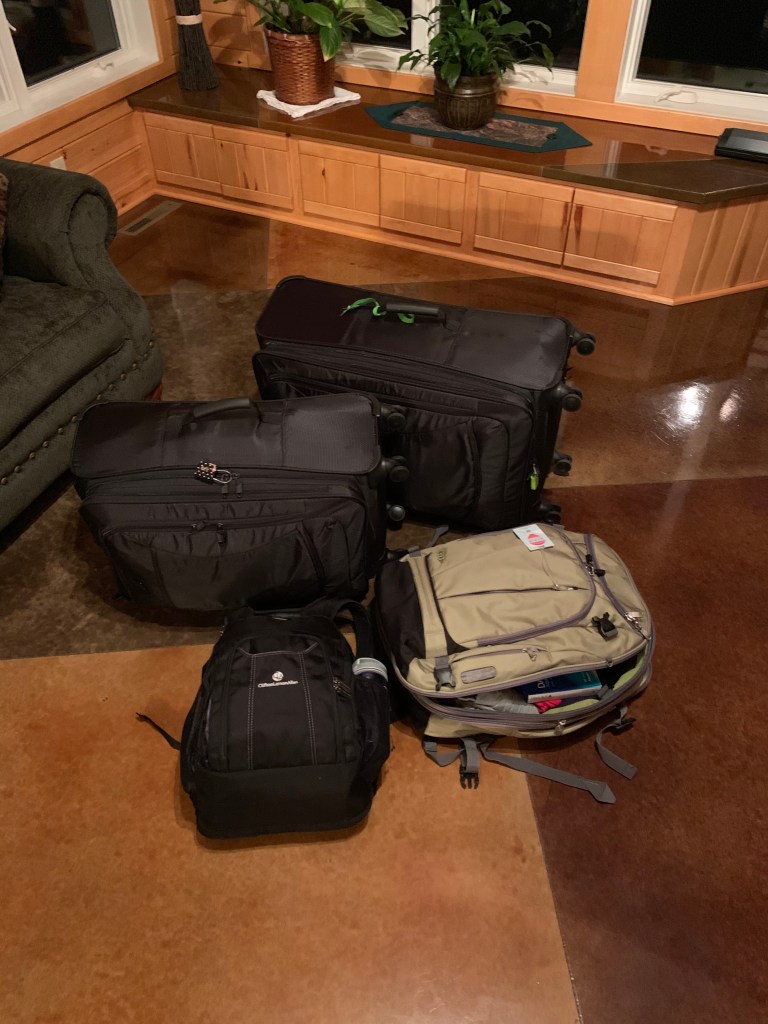
Here’s to packing life up and flying to the other side of the world.

My whole life packed up!

Here’s to the beginning of accepting the toughest job I’ll ever love.

Emilie

My Mongolian School

Just like Peace Corps Volunteers experiences being different, so is everyone’s schools. I’ll try not to generalize too much in this blog post, but I believe my school is similar to the majority of Mongolian schools, at least in cities.

The first day of school, September 1st, was a day of celebration. What were we celebrating? Going back to school. Learning. Teaching. Getting back together with friends. The energy rubbed off on me right away. I met my CP’s at school as they finished curling their hair and fixing their makeup in the morning, then we all went outside together to our large soccer/open green field behind the school where a large stage was set up and everyone had already began to gather. After many speeches (one of which was mine… all in the Mongolian language, yikes), performances (thankfully, I was not asked to dance or sing), and pictures (of which I was the tall redhead in the middle of my CP’s, always), we gathered for some airag, a traditional Mongolian drink made from fermented mares’ milk.

In the afternoon, we met for lunch at a local restaurant. Although many of the conversations were in Mongolian, the excitement and laughter was easy to join in on. I was nervous, but excited also. I had 11 English teachers (CP’s) to rely on this year. The training manager, my supervisor, also knows English. A language barrier was at the root of my nerves, so after today, I was more excited than nervous to take on the school year.

After one week of observing the five English teachers I would be working with for the first quarter, I had a solid grasp on how a typical school day works in Mongolia:

After the bell rings, the students all stand up to greet their teacher. The teacher says, “Good morning (or good afternoon) class,” and the students respond all together, “Good morning, Teacher!” Then the teacher asks, “How are you today?” The response all together varies depending on the class, but the students typically say, “I am fine, and you?” The teacher tells them how she is doing (all my English teachers are females), then they sit down and class begins. Sometimes they also have to recite their classroom rules which are typically something along the lines of be active and pay attention.

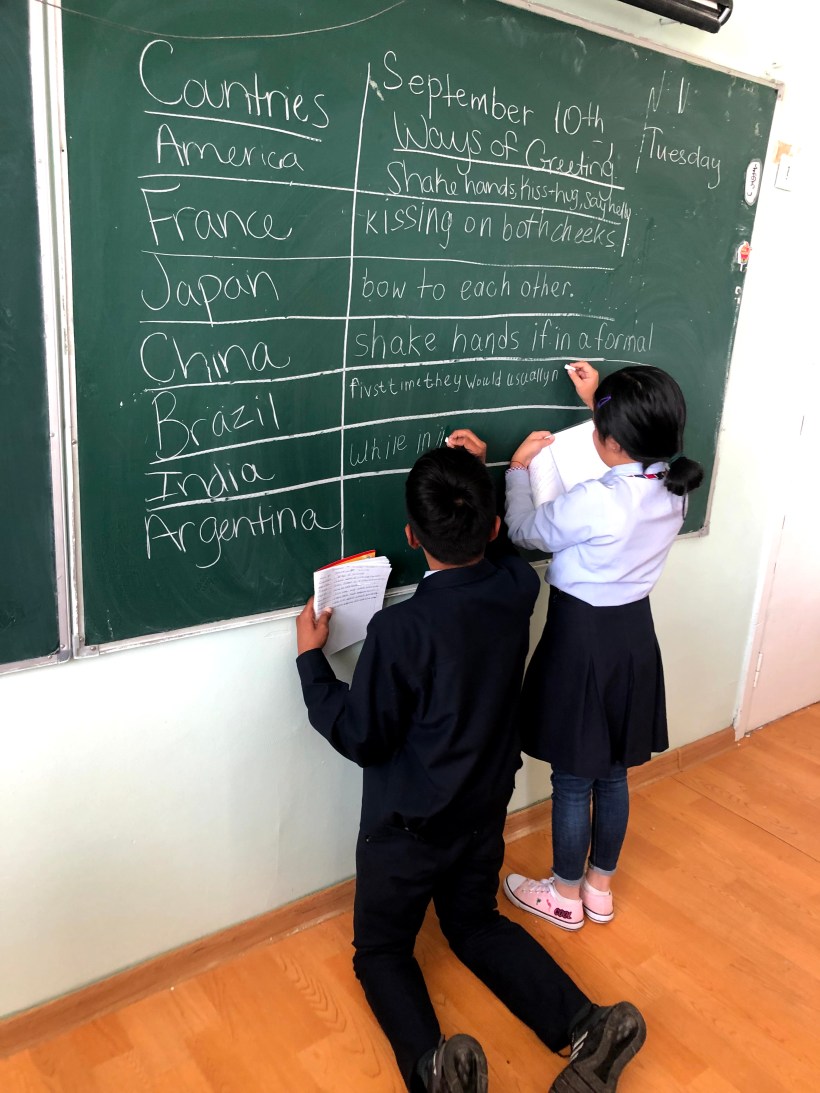
Classes typically have 20-30 students. Every classroom has tables as desks with a chalkboard or white board. Every lesson is 40 minutes long, but sometimes there are back to back or even back to back to back lessons, totaling two or three hours with one teacher. Most lessons are followed closely to the English book used countrywide for all Mongolian schools. I often learn during class also because these books are based off of British English. My students find it amusing when I make fun of the English in their books and teach them the differences in American English. Mainly, they just love having me in their classroom, and I appreciate that a lot.

I often lesson plan with my CP’s and have a speaking or listening section during the lesson because I’ve realized I am very good at knowing what the right answer is for grammar, but I don’t often know WHY. My CP’s are very good at teaching the WHY in grammar (the tough stuff) and I do the rest (the fun stuff).

Because I have five CP’s this quarter, I teach three lessons per week with each of them. That is 15 hours of team teaching on top of 6 hours of school clubs (English Speaking Club, Teacher Creative Writing, and Student Creative Writing), and about five hours of community clubs (I help my other PCV’s here with Student Speaking Club, Adult Speaking Club, TOEFL prep, and Movie Club) at the local library. This totals to roughly 26 hours every week of work, but if there’s anything I’ve improved on already since beginning this volunteering, it’s how to be flexible, even when there is a schedule in place. There are many days where I stay longer to help with a certain class or an individual student, and there are also days when there is a test in the class, so I am told that I don’t have to be there (once I’ve already walked into the class, usually).

Overall, yes, I stay pretty busy, but I love the atmosphere at my school. The students always say, “Hello, Teacher!” to me as we pass in the halls and the other teachers are kind to me as we sit in the teachers’ room waiting for our next class. They often like to practice their little English on me or push my limited Mongolian language knowledge. The teachers’ room also has WiFi, so this is usually my time to hang out on social media and stay connected with happenings at home.

Lastly, all the students and teachers wear uniforms. My CP’s wear a navy dress with red trim and the students wear some combination of a tie and navy jacket. In the beginning, I felt pretty odd in my own business clothes, but as weeks have gone by, teachers have began to wear their own business clothes as often as their uniforms.

With Fall break already approaching at the end of this month, I feel very confident talking and reading in front of all the grades I teach (6th, 7th, 8th, and high school). I especially have a soft spot for my 12th graders since they are focusing on doing well in class and preparing to take tests to try to get into universities and/or travel to other countries. One of my biggest goals during my service is to help these students travel and get into the university of their choosing. It’s definitely not an easy task as a Mongolian student, but I have many smart and talented students who I have a lot of confidence in.

So, that’s been my week to week life. On weekend, I often hang out with my sitemates or other friends I have met along the way. We have family dinners, watch movies, and explore our city. I am looking forward to getting the chance to explore more of Mongolia within these couple years.

On a side note, winter has already began. It’s been freezing every night and we’ve already had a couple small snows. I am staying plenty warm with my heated apartment and winter jacket that I brought from home. We’ll see how this jacket fares against the dead of winter, coming soon, I fear.

Emilie

PCV Site Placement: Apartment Edition

When I got accepted to Peace Corps Mongolia, I was convinced it was because I mentioned in my interview that I have a wood furnace at home… that I am used to making a fire and keeping it going to maintain a warm house. I thought that my ability to live in the country and grow foods, harvest foods, and be without the city’s resources was what made me a good candidate for Peace Corps Mongolia. I could picture myself thriving in an isolated ger… I thought Peace Corps Mongolia could, too. I envisioned myself going on this list titled, “Fit for a Ger.” All throughout training, I paid attention to how my host family cooked all of their food on a wood stove. I remembered to bring toilet paper everywhere for using outhouses. I looked forward to gathering enough water for my ger to get me through snow storms and long periods of cold.

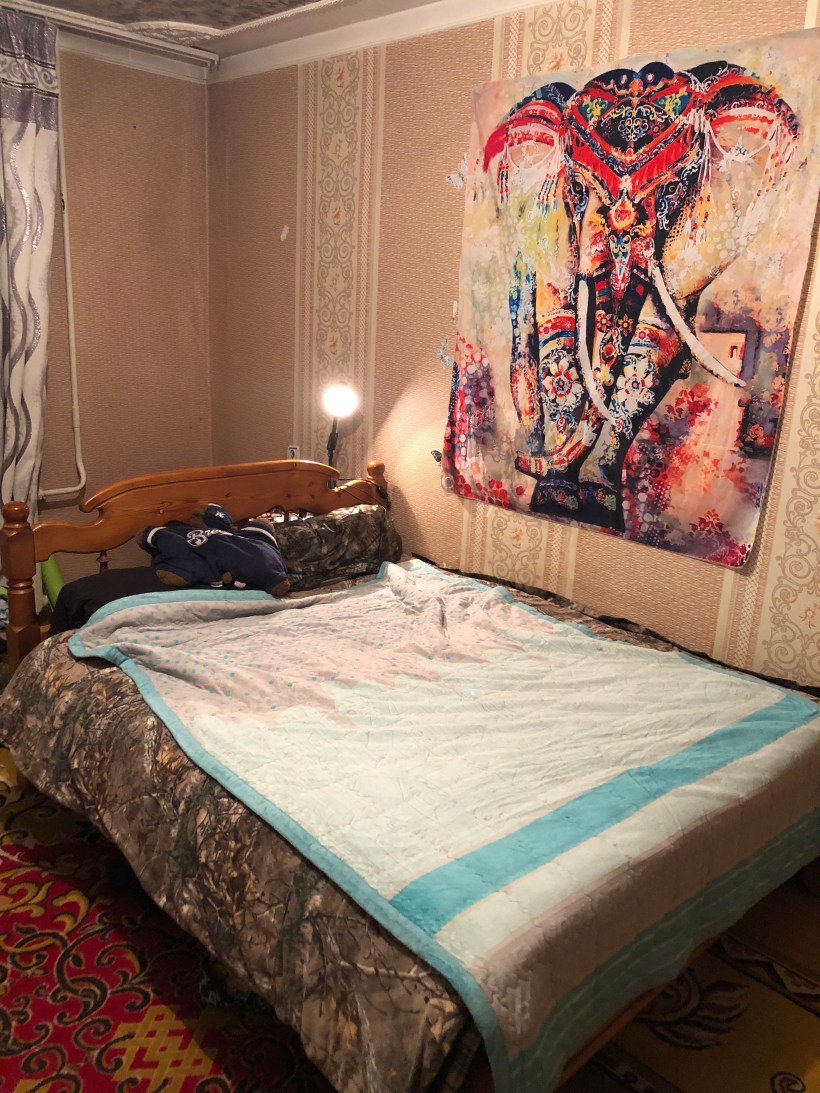
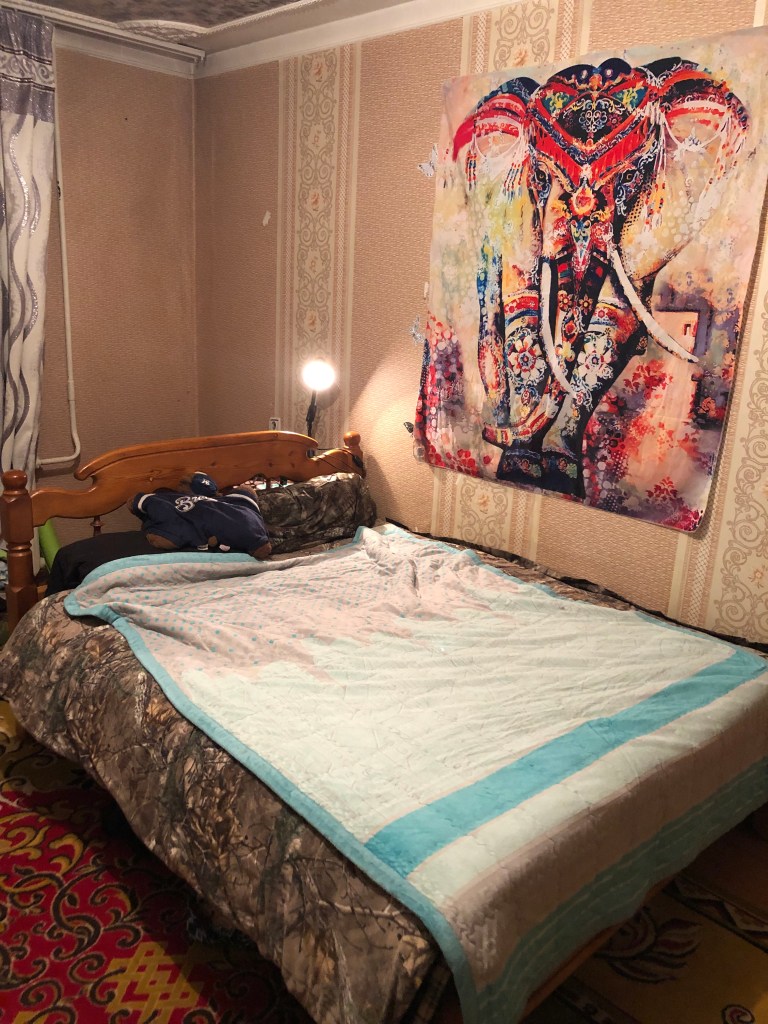
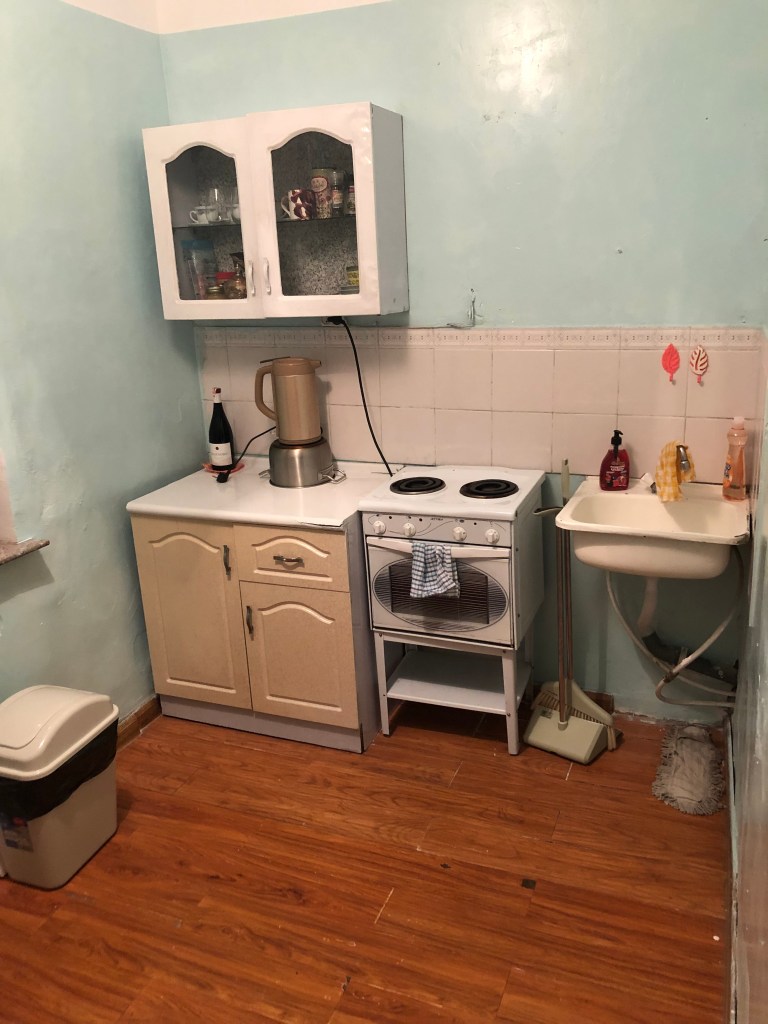
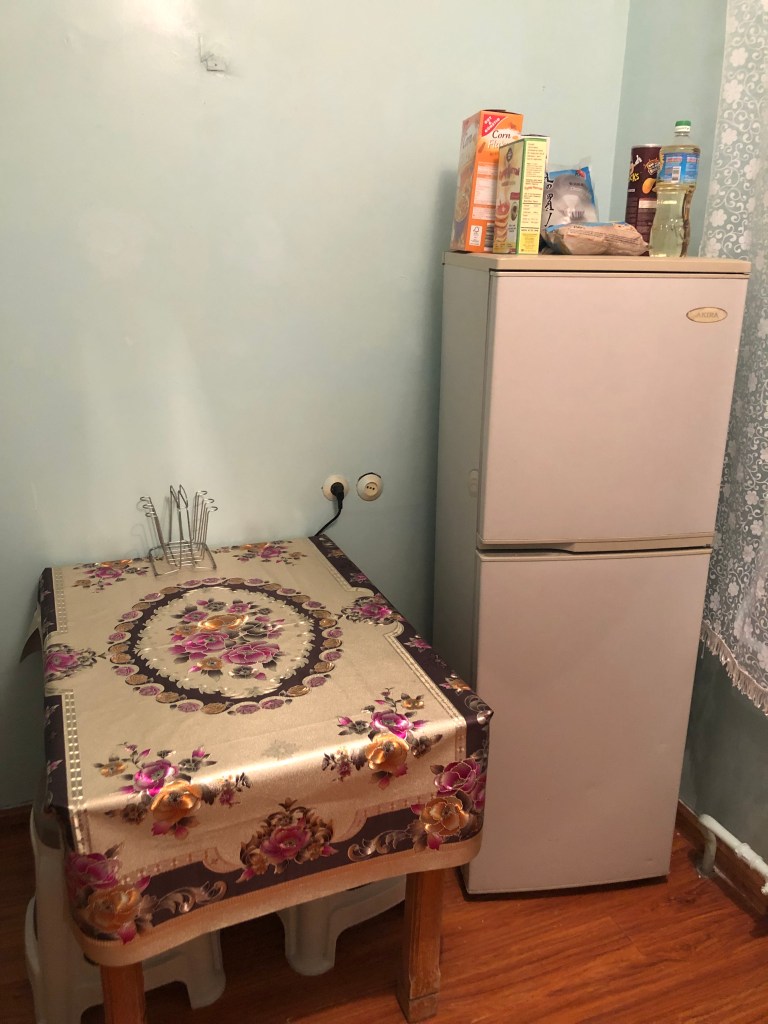
Then, Peace Corps placed me in one of the largest cities in Mongolia with heat, running water, a stove, oven, refrigerator, and even a king-sized bed.

There is no way you will ever catch me complaining about this. I am so excited to have these resources throughout my service, but at the same time, it presented quite the personal conflict.

Before I left home, I told everyone I was going to Mongolia, a place that could rarely be correctly identified on a map, where I could live with limited resources and be just fine. Everyone told me how brave I was to choose a lifestyle like this for myself and it made me feel both nervous and excited for my journey. Now, I’m telling everyone about my beautiful apartment with a grocery store closer to me than ever before in the United States.

To put it simply, I felt like a fake Peace Corps Volunteer. We sign up to live at the level of the locals, teach English and American culture, and bring the experience home two years later to teach about the Mongolian culture. It took a few days for me to remember that I am still doing all of those things in my city apartment, the same as other volunteers are from their small soums and gers.

Living with less resources does not make you a better or “realer” Peace Corps Volunteer.

Many many Mongolians live in apartments in the cities. Nomadic life does not encompass all Mongolian life, not even the majority of Mongolian life anymore, although it remains central to their culture.

We were told repeatedly to have zero expectations about where we will be placed. Foolishly, I just didn’t even entertain the thought of an apartment, even though that is where many of us PCVs were placed.

So, here’s to my new life. I am neighbors with one of my CPs, a 30 second walk to the nearest store, a two minute walk from my school, and within a 20 minute walk from three other PCVs. The school that I am teaching at has a very high level of English. This city in general has many residents who speak English very well.

I talked to one of my Regional Managers about my placement after finding out. She never mentioned my interview or even my home life. She spoke solely of my resume. My school has a psychologist who I can run Psychology Club with–I was a psychology major. My school has a great foundation in speaking English, but they would like to increase their writing abilities–I was a writing minor. The fact that I played volleyball was just the icing on the cake for my placement. Many Mongolian schools enjoy participating in volleyball competitions, especially the teachers at my school.

I guess wood furnaces aren’t that big of a deal.

This is why we were told so often not to have expectations when it came to site placement. There is so much more going on behind the scenes that is meant to not only give us the best experience possible, but to enable us to make the largest impact possible for our communities, too.

September 1st always marks the first day of school in Mongolia. A ceremony is held, even on the weekend, to celebrate the beginning of learning for the year. I cannot wait to not only teach, but continue to learn, too.

Emilie

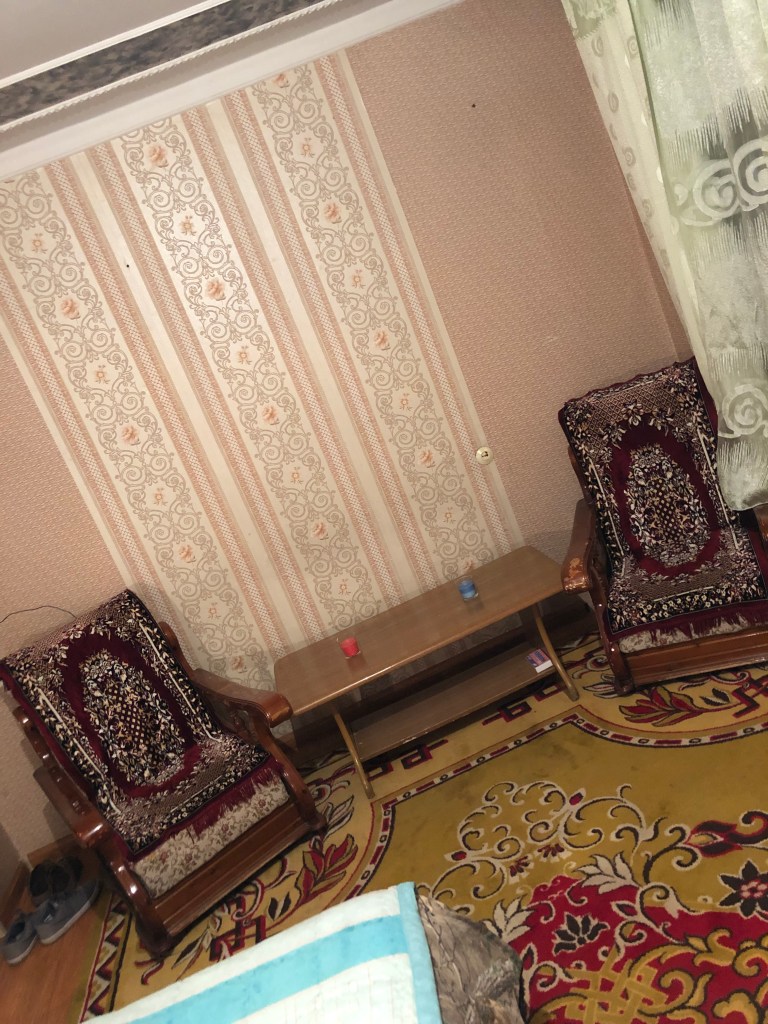
P.S. Here’s a few pictures I took of my apartment a day or two after settling in. 🙂
Obviously my favorite aspect of the apartment
The kitchen is a close second…
Still working on not eating the same four food items every day. Plenty of fridge space!
A cute little space for guests, too

Dear Future Mongolia PCVs…

Now that I am through training, swearing in, and moved into my apartment, I feel like it is my duty to give some pointers for those of you packing and wondering what the heck to put in your bags for the next 27 months of your life. So, here it goes.

  • #1 Bring your favorite clothes

The best advice I read as I was getting ready to leave for Mongolia was to pack all of my favorite clothes. If you wear it often at home, you’ll wear it often here. It is really true. Even if you think you know better… Here’s an example.

I live in sweatpants at home. I’d like to blame it on being an athlete, but really they’re just very comfortable and I dislike dressing up often… or at all. However, when I was packing, I figured I wouldn’t wear them much because I would either be in business casual or sleeping. Wrong.

There were plenty of times when I was hanging out at home with my host family and many of them were in sweatpants. I wished I brought them instead of just shorts and business casual. It is true that you’ll need business casual, but you can always rewear four or five outfits. Dedicate the rest of your space to what you like to wear! You’ll find time to wear it if you like it.

  • #2 Footwear–particularly boots for A LOT of mud (and poop)

Mongolia gets a lot of rain around PST time when living in a small soum walking to school everyday. In my specific case, I walked through pastures (technically Mongolian roads) that got extremely muddy. Cars and trucks would even get stuck. Having just one pair of cheap rain boots instead of my nice hiking boots that weren’t high enough for the mud anyways would have been very helpful. Don’t worry about getting really nice ones, but I think all of us volunteers could have used a pair, especially during PST. You can just change into your business casual shoes once you get to school. I began leaving mine in a classroom. (A tidbit on business casual shoes: Make sure they are comfortable! You will be wearing them for at least 8 hours a day, five days a week.) You may get lucky and have a very short walk to school, or you may have a paved road to walk on (that’s pretty unlikely, though), OR Mongolia may have a dry August and you may not even need them! I can only use my experiences.

  • #3 Don’t pack expecting you’ll be living in a ger in the middle of nowhere… It might not happen.

I will talk about this experience in more detail in my next post, but essentially, I was positive that I would be living in an isolated location with very few resources. To prepare, I packed a solar shower, a couple large portable batteries, and an inflatable bed (a nice one from Sea to Summit).

I was placed in one of Mongolia’s largest cities with a king size bed, running water (hot and cold), and electricity.

I don’t use any of the things I brought. At least not often. The batteries may be nice for electricity outages, the bed is nice for guests maybe, but the solar shower is just packed away somewhere under my bed (I didn’t find a ger dweller to give it to, otherwise I would!).

But, WHAT IF. Honestly, even if I was currently in a ger, ger dwellers still have electricity (not as reliable, but they still have it). They still have beds (cushioning varies, but you can get this from cities when you get a chance to go early on right after swearing in). As for the solar showers, I get a lot of mixed reports. Ger dwellers who have them sometimes say they’re fantastic and worth it, and some do not. But they are completely worthless if you get access to a shower (sometimes the school dorms will have showers and allow you to use them, too). So I guess my ultimate advice is to not bring the solar shower.

Besides sweatpants, I wouldn’t have wanted to use the space in my luggage for other things, but it would have definitely helped with space and weight if I left a few of these items behind.

  • #4 Bring an extra empty duffel bag or two!

This was also great advice I got before I left. Peace Corps gives you a lot of things after orientation week and again after PST. It was really great to have a duffel bag for all of this. It takes up barely any space in your luggage when you leave home. You will most likely get a water filter, power strip, fire alarm, and a few other random things, just to help you visualize what size is best. I had a duffel bag from volleyball that is about 2.5 feet long that was perfect for it all.

Please keep in mind these are things that worked well for me! Your case may be different. Feel free to contact me with specific questions you may have. Packing was stressful, but, really, Mongolia has many of the things you’d like to pack, anyways!

Emilie, M30 TEFL

Leaving Family, Meeting Family

(Starting from the left)
My Mongolian grandma, sister, mom, and brother

It’s pretty common for all of us Peace Corps trainees to question why we’re doing this after we’ve already decided to do it. It’s a question that comes up still a lot even after a significant time in country, I’m told. It’s a question many of us were asked by family, friends, and professors before we left for service. It presented quite a challenge sometimes because what answer is good enough? “I want to change the world.” –too cliché. “I want to become a better person.” –there’s plenty of ways to do that without committing to over two years of service in a country you hadn’t even heard of before you got an email from Peace Corps. “I don’t know” is a HORRIBLE answer for the question, although it often seemed to be the most truthful one. The questions make you doubt. Are my reasons not strong enough to survive a commitment like this? Are there better ways to spend the next chapter of my life? Is it too late to change my mind? The period before leaving can be pretty scary.

Staging in Philadelphia, where all future M30s met for the first time, is when all of these questions, doubts, and negative feelings completely vanished. Finally, I was surrounded by people who didn’t want to know why the hell I’m doing something like this. We all ended up in the same city in the same hotel with the same agenda—get on a plane to Mongolia. It’s not that people at home weren’t supportive of my decision—they completely were! However, there was just no need for validation at this point with this particular group of people. We were all here, we were all possibly crazy, but we’re all going to do it. Instantly, these strangers became everything to me: The people I could last minute rearrange baggage with, the people who may possibly understand every emotion I feel every step of the way, and the people who will become my support system—my family.

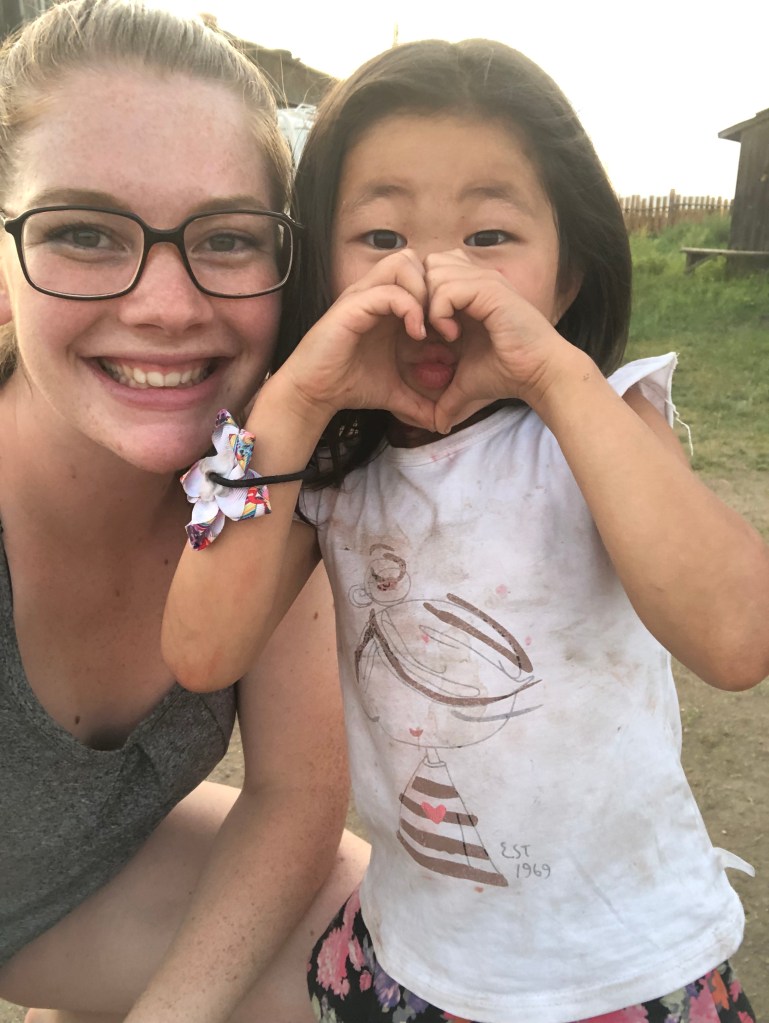
I can’t say for certainty when the moment was, but when a complete stranger reads off your name and tells you that the people standing in front of you are your new family now for the next three months, they don’t instantly feel like family. Even though they introduce you to a home that you will be residing in and a dinner table where you will now eat your meals… the familial feel doesn’t just fabricate in your heart. For me, it took some time, but I recognized the moments when they came. My 6-year-old host sister giving me half her pile of ankle bones (literally, sheep ankle bones… look it up) while playing the game so that I could continue to play with her, even though I was just about to lose. Giving me two ankle bones would have sufficed to allow me to stay in the game. Her generosity was so so sweet, that I didn’t want to just use the Mongolian word for “thank you.” I knew how much she loves to win. (Competition, especially winning competitions, is very important in the younger Mongolian culture.) So, I instead made a heart shape with my hands at her. She made it back. This is now our thing. Anytime I am leaving for language lessons, coming home from TEFL training, or going to sleep at night, we make hearts at each other with our hands. No verbal language. It is such a small and simple action, but it means everything to me, especially because there’s no verbal language barrier involved.

My little sister always being goofy

There was a time when my host grandma took my laundry off the clothes line while I was at school and not only folded it nicely and left it near the door to my room, but she hid two apples under a few folded shirts in the pile as a snack (the bruises were even cut off, guys). Or another time when my host aunt (who is 14-years-old), sat on the floor of my room for hours on various nights (often way past my bedtime) drawing various pictures of food, plants, and objects so that we both could label it for each other—I share the English word, she shares the Mongolian. Tonight, she sat in my room for hours again, but this time we graduated to having conversations. Often, a dictionary, Google translate, class notes, and even my planner/calendar were necessary to understand each other, but we did it. These tiny moments are so rewarding.

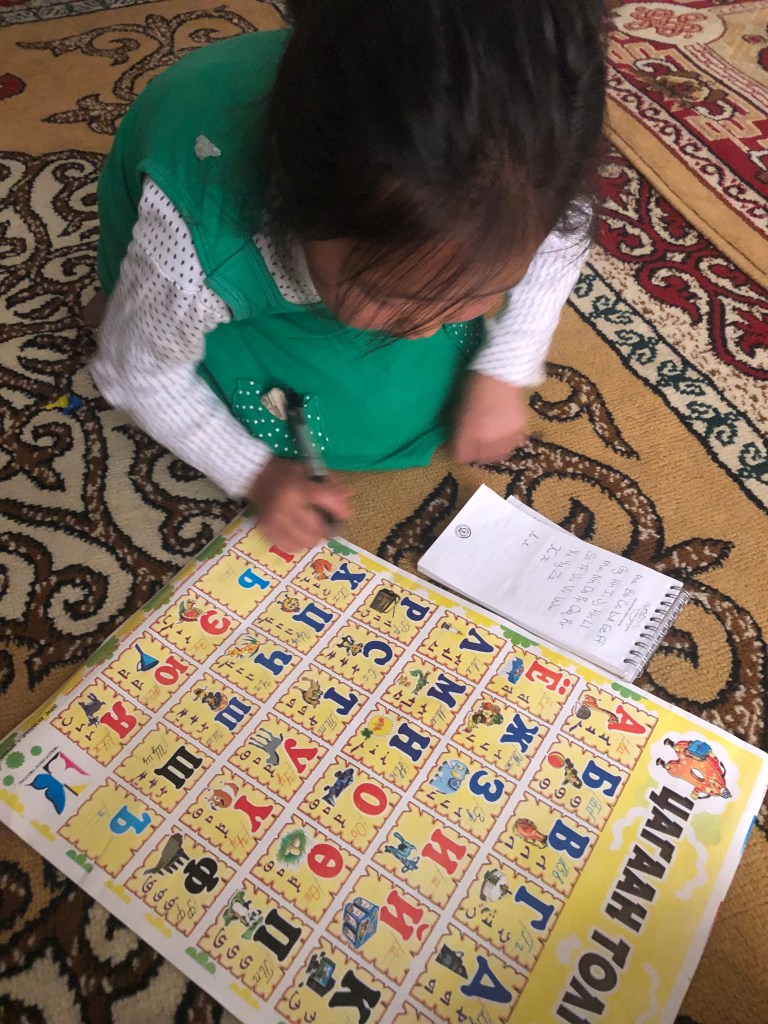
My sister teaching me the alphabet

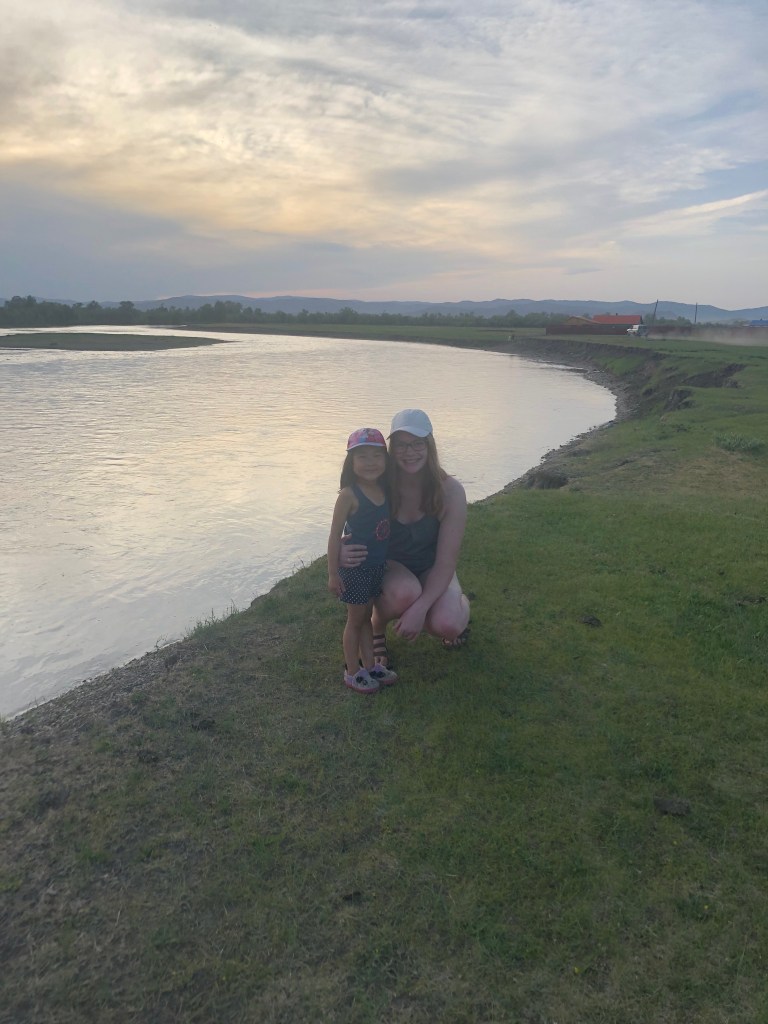
It’s tough to be on the same page with a family from a different culture, but it happens all the time for me. I was thinking about how volleyball is such an important sport to Mongolians (I know, I got really lucky with where I was placed), and I thought it was weird that my family didn’t own a volleyball. The next day, they came home from a shopping trip with one. One night after dinner, I thought about how beautiful the sky looked and how I’d like to go for a walk to the river to watch the sunset. My host aunt came into my room minutes after dinner to ask me to go to the river (this is something we should do often, but rarely do). On a hot afternoon, I was thinking how great it would be if I could at least dip my hair in the river water to cool down. The movie my family and I were watching ended shortly after this thought, and my host mom announced we were going to the river to swim.

The river is our favorite spot

The truth is, the mere fact that we are all humans already gives us so much in common. Everyone needs food. Everyone needs to cool down on hot days. Everyone enjoys beautiful things. Everyone likes to have fun. It’s not always that simple, but the moments when it is… they’re enlightening. Rejuvenating for every moment of frustration and confusion. Many Peace Corps blogs that I read before leaving mentioned the need to celebrate the little things because they’re what you will cling to when things get difficult. I get it now. There are nights when I am sitting at the dinner table as my host family has a conversation, and I don’t understand a word of it. There are times when I want to simply ask, “What did you do today?” or “What time is dinner?” and I can’t sift through the hours of language lessons in my head to come up with the right words. It’s frustrating and isolating, but every little positive moment makes up for these negatives, and then some. The extra ankle bones, the hidden apples in laundry, and the impromptu river walks… they remind me of the moments when my dad would purposely make perch for dinner when he knew I was coming home from Lakeland that night, or the old fashioned waiting for me on the counter (garnished with two cherries, of course). It’s about the extra peach cobbler waiting in the fridge, non-verbally reserved for me, or the jar of salsa tucked into a jacket I asked for after a volleyball game at Lakeland (accompanied by a bag of multigrain Scoops chips, of course).

These beats of unasked-for kind gestures are universal in families. They’re apart of what makes loving your family so easy. They’re apart of what already has made this experience worth the leap.

So, why did I decide to join the Peace Corps?

Mongolian Family Celebratory Dinner

To find apples in my laundry.

Emilie

Adjusting to Mongolian Life

I have been at my Pre Service Training site for about 20 days now. A pleasant surprise that came with our Peace Corps SIM card was a 3 GB of data per month deal. Unfortunately, I have used up nearly 60% of my data with Google Translate. Another 20% went towards daily updates to my family nearly every day for the first couple weeks, and the last 20% goes to Facebook Messenger where my fellow PCTs and coordinators talk before and after classes about plans, homework, etc. My host family and I were pretty good at flipping through the English-Mongolian Phrase Book we were given by Peace Corps at first, but there are certain specific things I wanted to ask my host mom or aunt like, “How was your day in the countryside?” or “Where is my dad?” that Google Translate was amazingly helpful for. The point of that is I wrote this about 20 days into PST, but I am not sure when it will actually be posted because I do not have Wi-Fi and my data is nearly dried up for this month.

Ger camp was beautiful

Let’s go back for a second. My first week in Mongolia with the 44 PCTs was at a touristy ger campsite type thing near the capital of Mongolia, Ulaanbaatar (or UB for short), home to the vast majority of Mongolia’s population. We ate well, took hot showers, and even had the fires in our ger made for us. It wasn’t an overly accurate depiction to us on how we would be living once we got to our PST sites. After a long, hot, and slightly cramped van ride to our site, the eight of us were tired and dehydrated. I had a mad headache that I was eager to get rid of with a little nap and water. But first, it was time to meet our host families.

Moments after meeting my family
My Host mom, grandma, and sister welcomed me
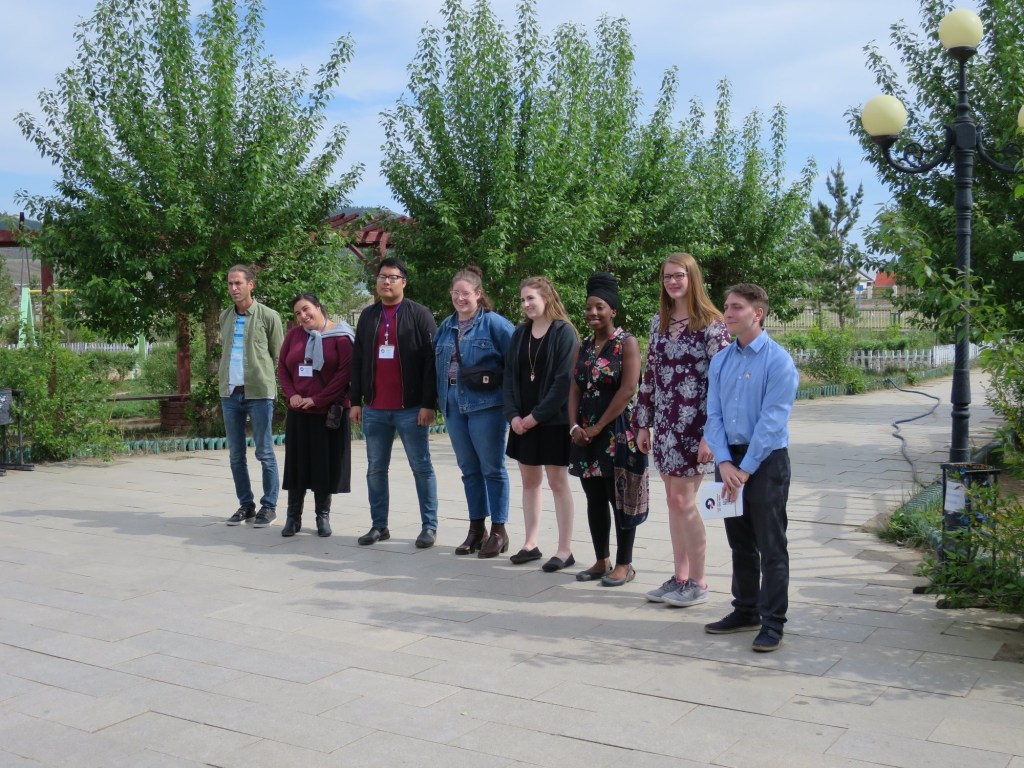
Lined up waiting to meet our families

It was exhilarating. Nerve-wracking. Okay, maybe even scary. But excitement nearly out-weighted those other emotions. We lined up in front of the host families dressed in their beautiful traditional Mongolian clothing. We were not instructed to wear overly nice clothing, but I was grateful that I put on a nicer dress (actually stolen from my teammate, Erin… sorry, Erin and thank you!) We were called one by one to be claimed by our family and then went into the school we would have training at for the next three months to have a reception with some juice, water, and snacks. Everything was a little awkward with the language barrier, but you could feel the families’ excitement to take care of another child for a few months. My grandmother, mother, and little sister (6-years-old) were there to greet me and take me home. We packed my host family’s car with my belongings (they seemed a little stunned at all the bags that came out of the van with my name on them). I didn’t mention to them that there was actually one more large bag that I left with Peace Corps as a winter bag that I would be picking up later after PST (mainly because I had no idea how to say that in Mongolian, but also because my new family was stuffed in our little white car with all my luggage as it was).

Because this is an accurate recount of my experience, and that usually means there were exceptionally awkward and embarrassing happenings, I’ll continue with the details of my first hours at PST site. We pulled into the quaint yard of my new house, and there were a few pressing matters I needed to take care of before I could begin making good impressions with my family: 1) My headache had gotten worse, and I was actually suppressing nightmare-like cognitions of vomiting in my new room within minutes of being introduced to it. 2) I really needed to pee. I tried to stay hydrated on the ride here, but evidently what I didn’t sweat out on this warm day went right through me. I was mentally prepared for a hole in the ground, but I needed to be shown the location of said hole… soon. 3) I didn’t have anywhere near the necessary language skills to express these dire needs as my family scrambled to help bring my bags in and set the table for dinner. On top of all this, when we got home to greet my host aunt and 2-year-old host brother, he had just woken up from a nap, obviously suffering from an allergic reaction and needed to be rushed to the hospital. Only my host mom went because everyone wanted to make sure I settled in well. Add guilty to the many emotions I was feeling at this given moment, and you’ve got a delicious cocktail of borderline panic stirring.

Thankfully, I was somewhat prepared and had a little sheet with common words and phrases helpful for the beginning of this transition. I found the word for “outhouse” and said a pronunciation probably 60% right to my host aunt maybe six times before she thankfully understood what I needed and walked me across the yard, past the garden to our outhouse. My intense need for this little red house at the corner of our property probably made first impressions a little more forgiving, but, guys, it was totally fine and has been fine ever since. Lack of plumbing has been a frequent question I’ve been asked about and honestly, it’s been very easy. Different and an adjustment like everything during the first couple days, but easy.  

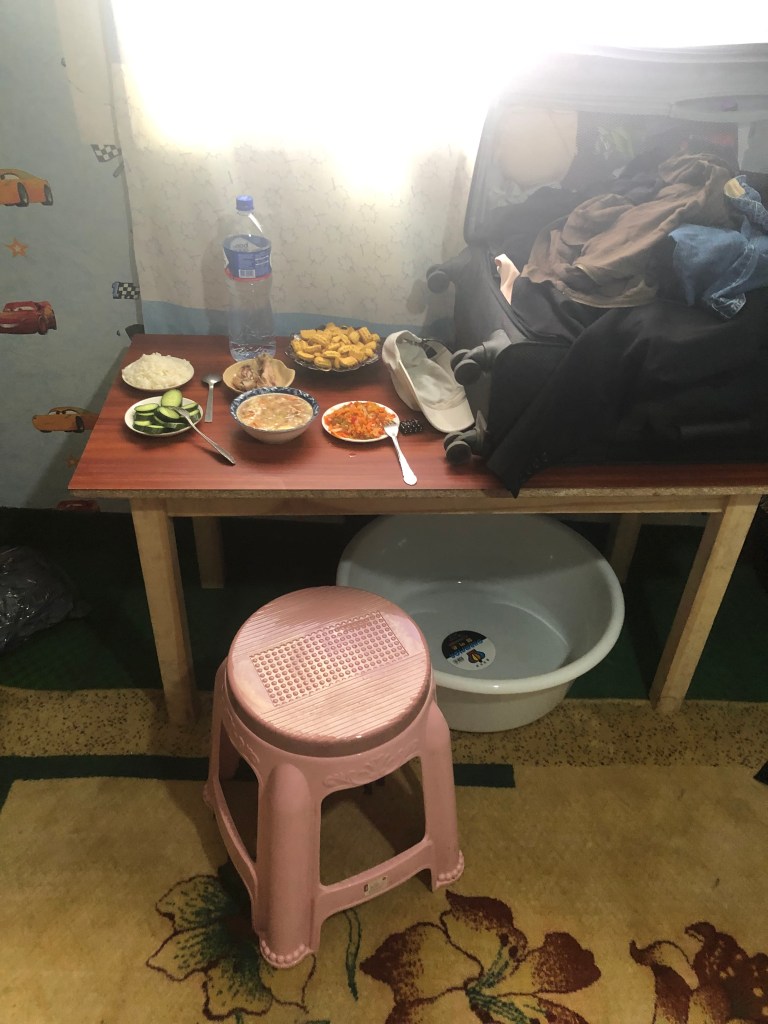
Once one of my urgent needs was taken care of, my second seemed to get worse. Dinner was already ready and sitting on the table. I began stuffing an already pretty stuffed stomach (my host grandmother made sure I ate plenty of chips and peanuts after getting out of the van), so that I wouldn’t be rude. This seemed to be making my head even worse. Visions of vomit were getting dangerously close to becoming my reality. My aunt and grandma stepped into the kitchen for something, allowing me to run to my room to grab my Mongolian language cheat-sheet. I found a phrase close to what I wanted to say: “I would like to rest.” As soon as they got back in the room, I fumbled my way through the pronunciation, but my host grandma seemed to get it right away. She motioned for me to go to my room. I said thank you (in Mongolian—one of the few words I mastered before leaving the states), and headed to my room. What I wasn’t expecting was each family member grabbing every single food and drink item off the dinner table and stacking them on the table in my room. I had no idea how to say ‘That is not necessary” or “Please, continue to eat; I’ll be rested soon.” Instead, all I could say was “Thank you, thank you, oh, thank you!” as the food poured into my tiny tidy room. The moment my door closed, I popped some Advil, took off my glasses, and closed my eyes for an hour (after chugging the whole liter of water from the dinner table that conveniently got carried into my room, also). Sleep wouldn’t come because my mind was going in all different directions, but the short rest was helpful. I couldn’t stop wondering what they were eating for dinner if all the food was sitting in my room.

Most of the food my host family brought into my room after I mentioned I wasn’t feeling well

Okay, so the first couple hours were rough. However, when I emerged from my room later, my little brother was back home and giggling, and my host aunt and mother were eager to have a couple broken conversations in English/Mongolian about ages, family members, likes and dislikes, etc. I showed my family book my mom and I made with Shutterfly before I left home, and they shared what English they knew. Thankfully, my host mom had taken a few English classes and it is better than my Mongolian, but that doesn’t really say much. Basically, I was able to figure out names, ages, and relationship to each other, which was a good start.

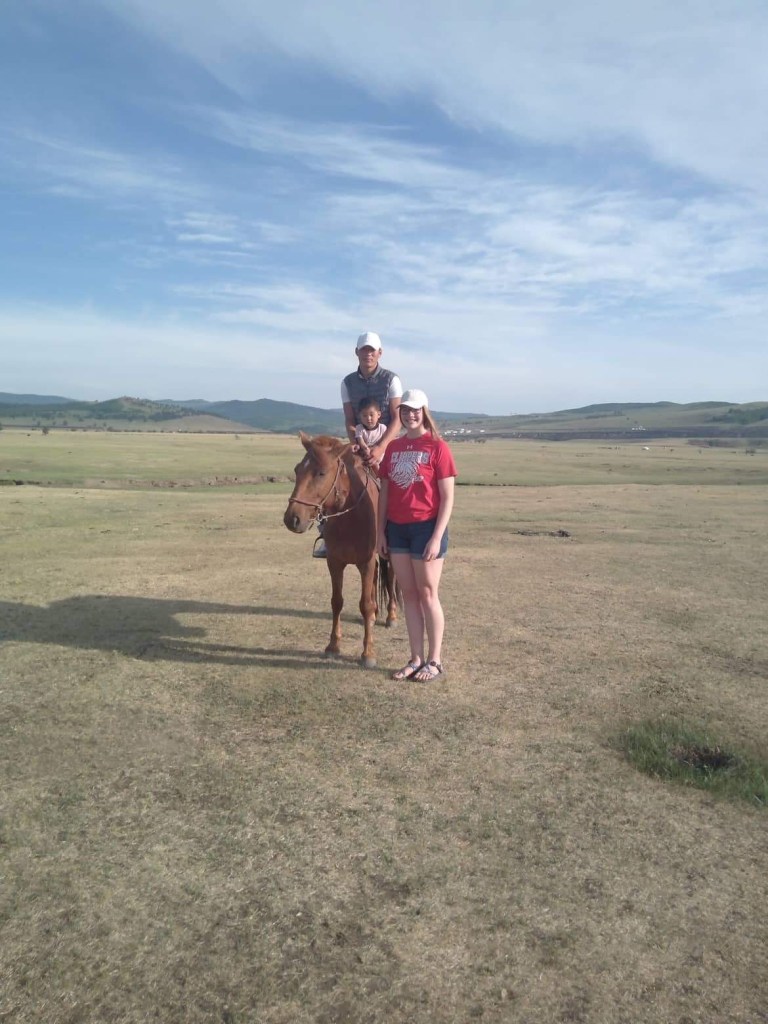
As you can imagine, I am in a nice routine at this point, as is my host family. We get along really well. I am best pals with my 6-year-old sister, my 2-year-old brother is the same as any other toddler in the Terrible Twos stage (occasionally adorable, always sassy), and my aunt (who is only 14) likes to learn English in my room nearly every night as she teaches me Mongolian simultaneously. My host dad has a job at the mine and is gone for days at a time. I actually didn’t meet him until around day eight. Both of my parents are 25, so I don’t call them “mom and dad” like some other PCTs call their host parents. I call them by their names, just as I do my aunt and siblings. I think the youthfulness in the house has helped with the transition. There’s a lot of joking, laughing, playing volleyball, and learning. As much as I am learning to live in Mongolia, they are learning to live with an American. I think my comfort level with carbs, countryside activities like riding horses and milking cows, and my shared love for volleyball has helped make their new experience easier, in addition to making my transition easier. They treat me as one of their own and have made me feel right at home.

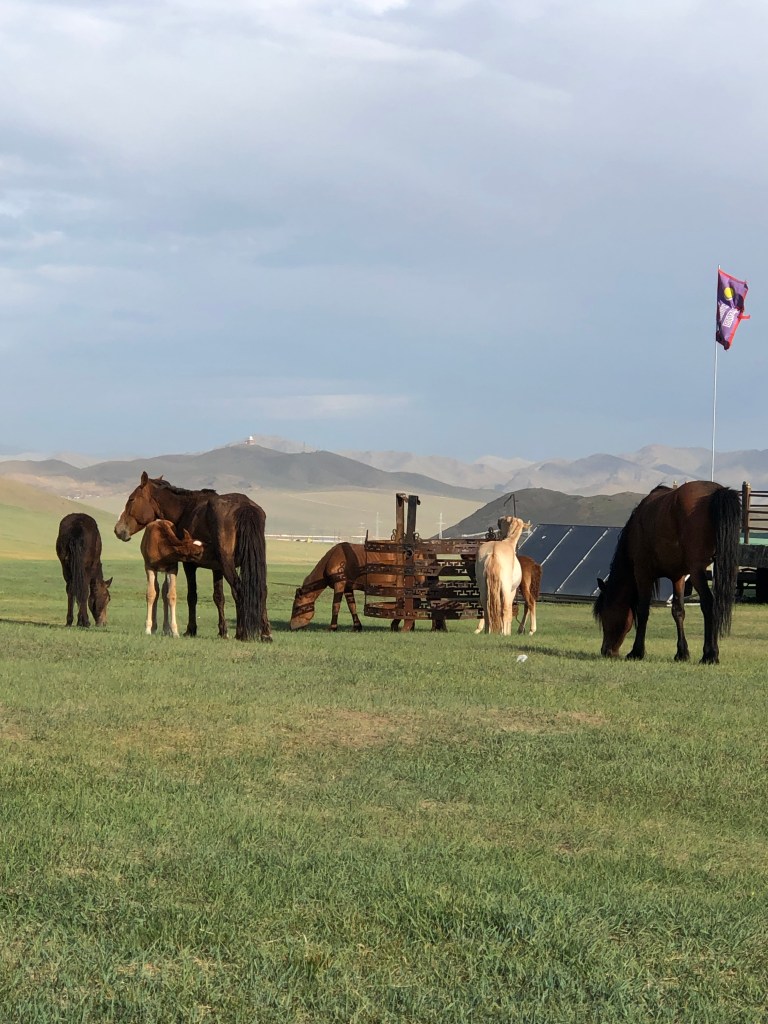
In the countryside with my family

No worries, everyone. I am doing just fine. I already know more Mongolian than just “thank you,” although there is still a long language acquisition road ahead of me. I am looking forward to sharing more stories, mainly because I have better ones to share that don’t involve bodily functions. J

Emilie

Introducing: The Land of the Blue Skies

When I first heard that my application was being reviewed for a teaching English position in Mongolia, I was sitting on my bed in my dorm room at Lakeland University in-between classes. I instantly closed out of my email app and opened Safari–Where the heck is Mongolia???

Asia! Between Russia and China–okay, that sounds neat! And that was it. I didn’t do any further research. It wasn’t until I was asked to schedule an interview that I truly began watching videos on the Mongolian culture and language. The most striking fact I found in my research? The Mongolian language is at the top of the second to highest tier on difficulty in the world (according to a credible source, if I remember correctly ;)). The Mongolian people live in yurts, build fires in the winter, eat a lot of meat and carbs, and are amazingly hospitable. I knew everything I needed to know: Work hard on learning the language, and the rest would be a piece of cake.

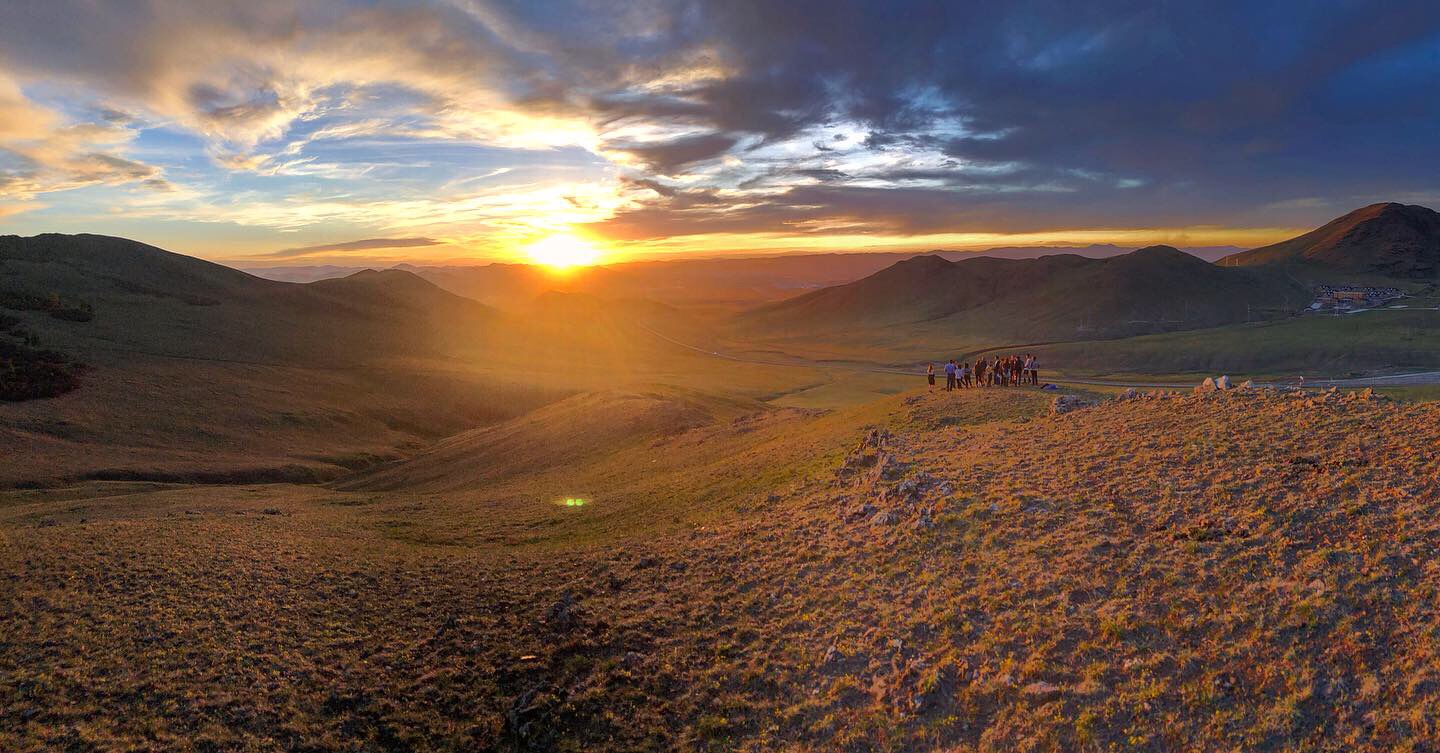
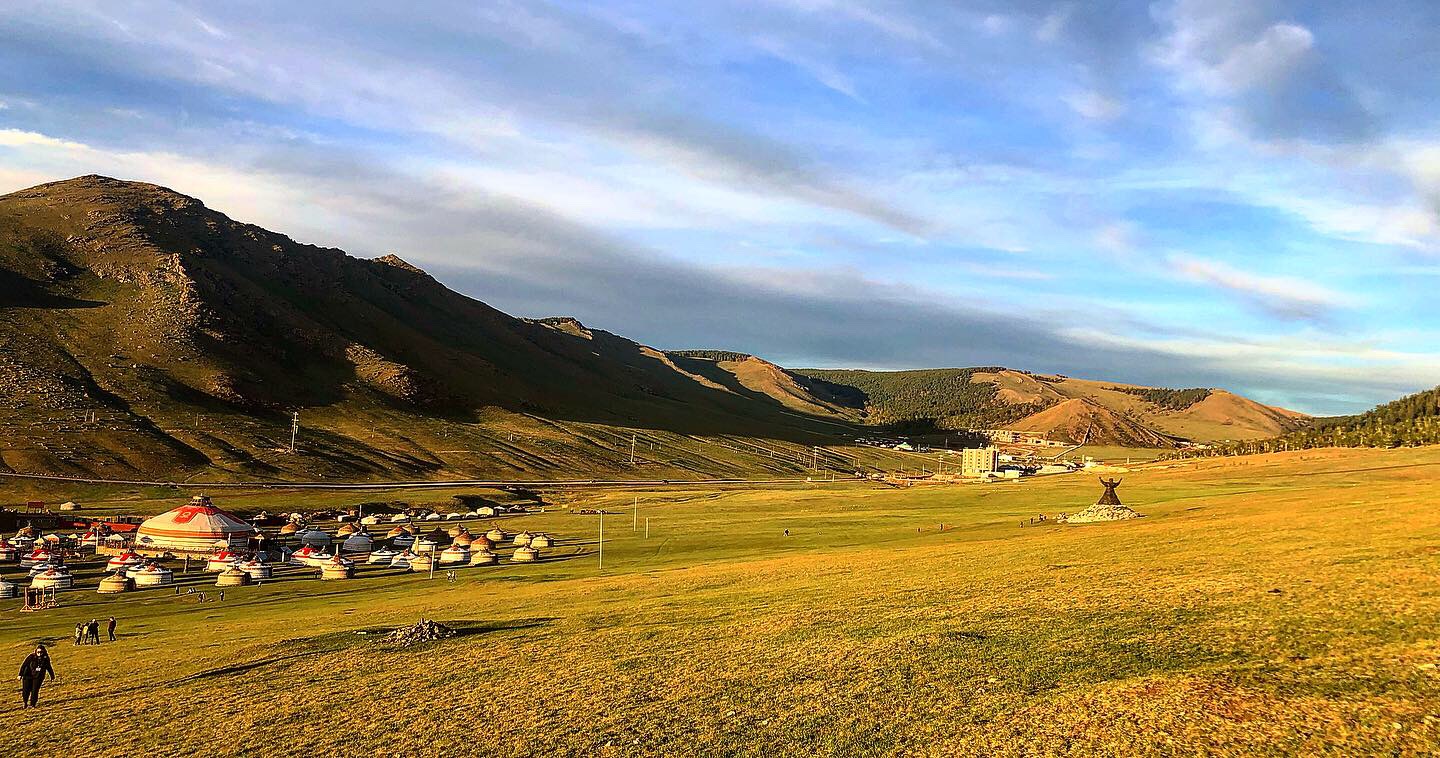
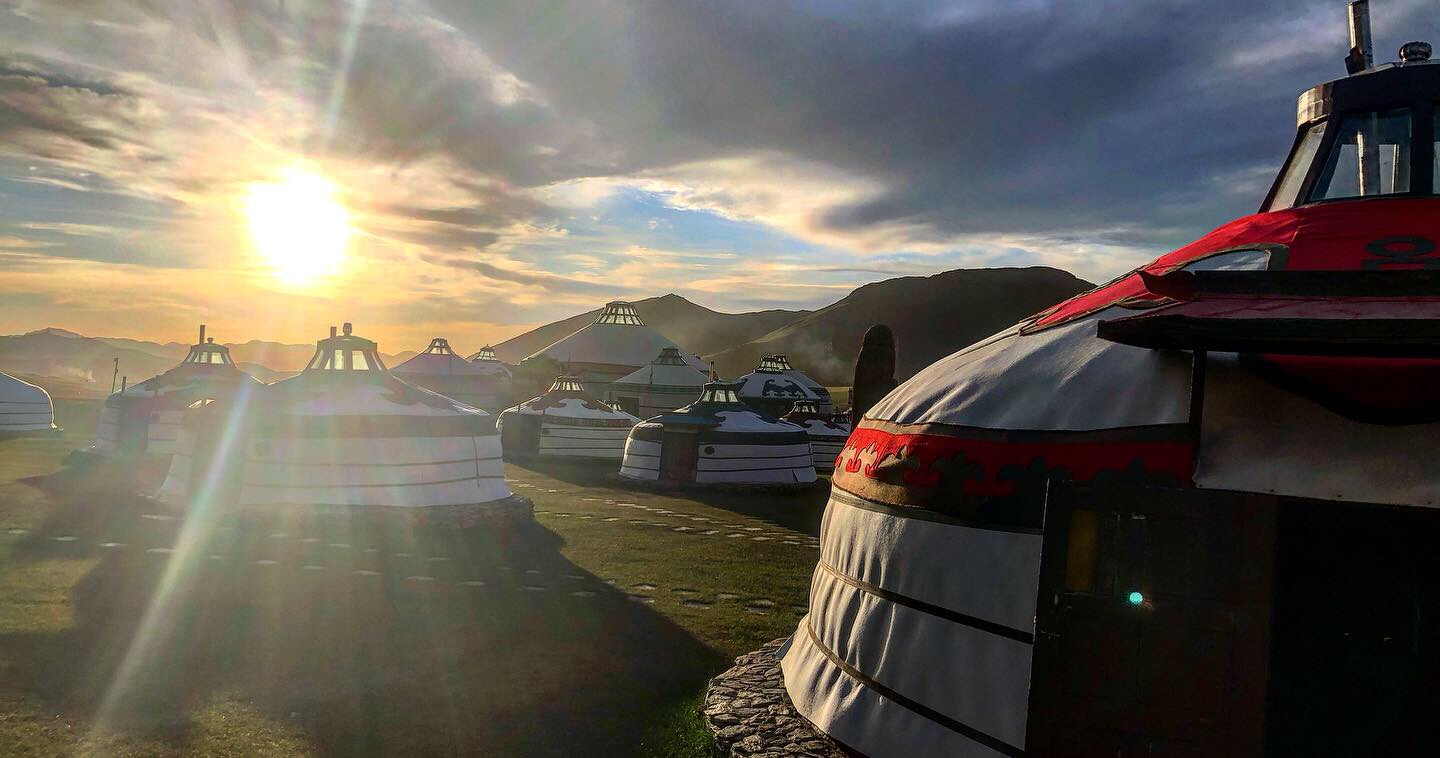
So far, my assumption that I made months ago from the comfort of my two-story home hasn’t been completely off. I’ve learned of the insanely cold winters when school gets cancelled for weeks due to temperatures around -50 (not including windchill) and you’re sleeping with your electronics and water inside your sleeping bag. However, it is June now, and the temperatures have been around a comfortable 70, I’ve been living in a “tourist ger” (a yurt that is really nice), and have been enjoying hot showers (for the most part) in the building across camp that looks like a castle. I’ve had delicious meals prepared for me and fires built nearly every night. I’ve hiked steep hills (perhaps small mountains?) to watch distant mountains seemingly miles away highlighted with soft oranges and reds in the evenings. Yes, I suppose this is Mongolia, but I’ve only experienced orientation week in the early summer time.

Evening hike
Ger camp
Gers

It’s been an amazing week to say the least. The Peace Corps staff has been informative and supportive. I feel nervous, but excited to meet my solely Mongolian speaking host family tomorrow, which is where I will be living for the next three months! I don’t know how reliable the WiFi will be, so this may be my last post for a while, but I am eager to immerse into the true Mongolia: learning the language, making traditional Mongolian dishes with my host mom, and celebrating every day in the spirit of a hospitable and nomadic lifestyle. I have a feeling the Mongolian landscape is not nearly as beautiful as the people who care for it. Bring on this challenging journey.

Emilie

“If you want to build high, you must dig deep.” Mongolian Proverb