I have been at my Pre Service Training site for about 20 days now. A pleasant surprise that came with our Peace Corps SIM card was a 3 GB of data per month deal. Unfortunately, I have used up nearly 60% of my data with Google Translate. Another 20% went towards daily updates to my family nearly every day for the first couple weeks, and the last 20% goes to Facebook Messenger where my fellow PCTs and coordinators talk before and after classes about plans, homework, etc. My host family and I were pretty good at flipping through the English-Mongolian Phrase Book we were given by Peace Corps at first, but there are certain specific things I wanted to ask my host mom or aunt like, “How was your day in the countryside?” or “Where is my dad?” that Google Translate was amazingly helpful for. The point of that is I wrote this about 20 days into PST, but I am not sure when it will actually be posted because I do not have Wi-Fi and my data is nearly dried up for this month.
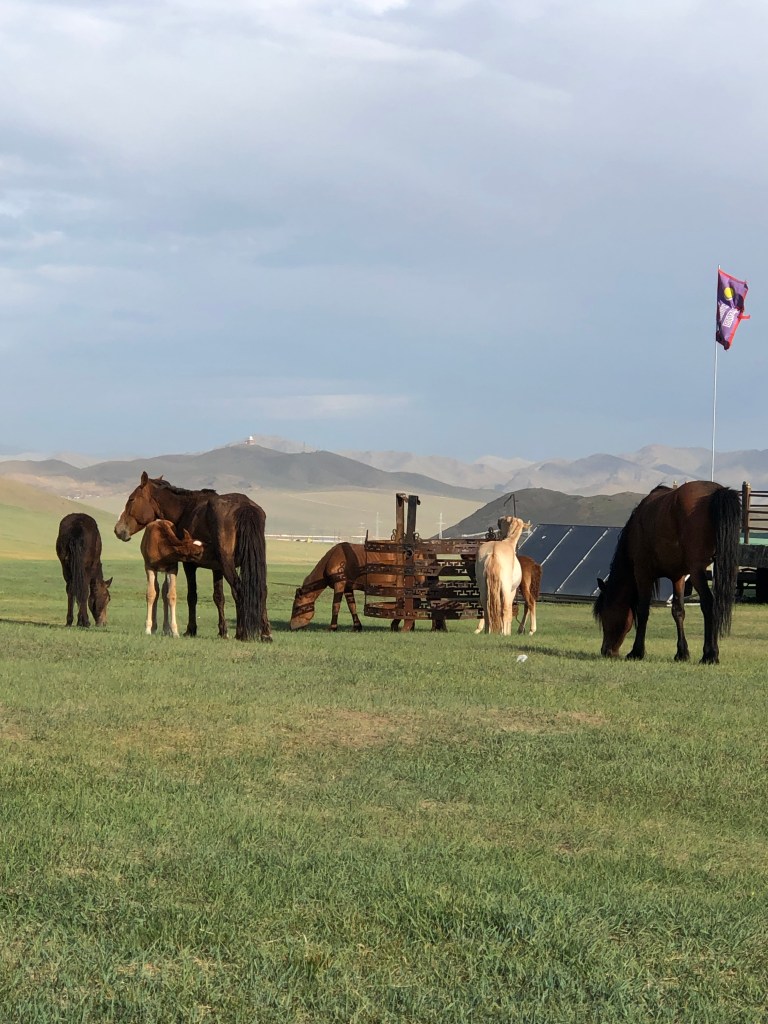
Let’s go back for a second. My first week in Mongolia with the 44 PCTs was at a touristy ger campsite type thing near the capital of Mongolia, Ulaanbaatar (or UB for short), home to the vast majority of Mongolia’s population. We ate well, took hot showers, and even had the fires in our ger made for us. It wasn’t an overly accurate depiction to us on how we would be living once we got to our PST sites. After a long, hot, and slightly cramped van ride to our site, the eight of us were tired and dehydrated. I had a mad headache that I was eager to get rid of with a little nap and water. But first, it was time to meet our host families.
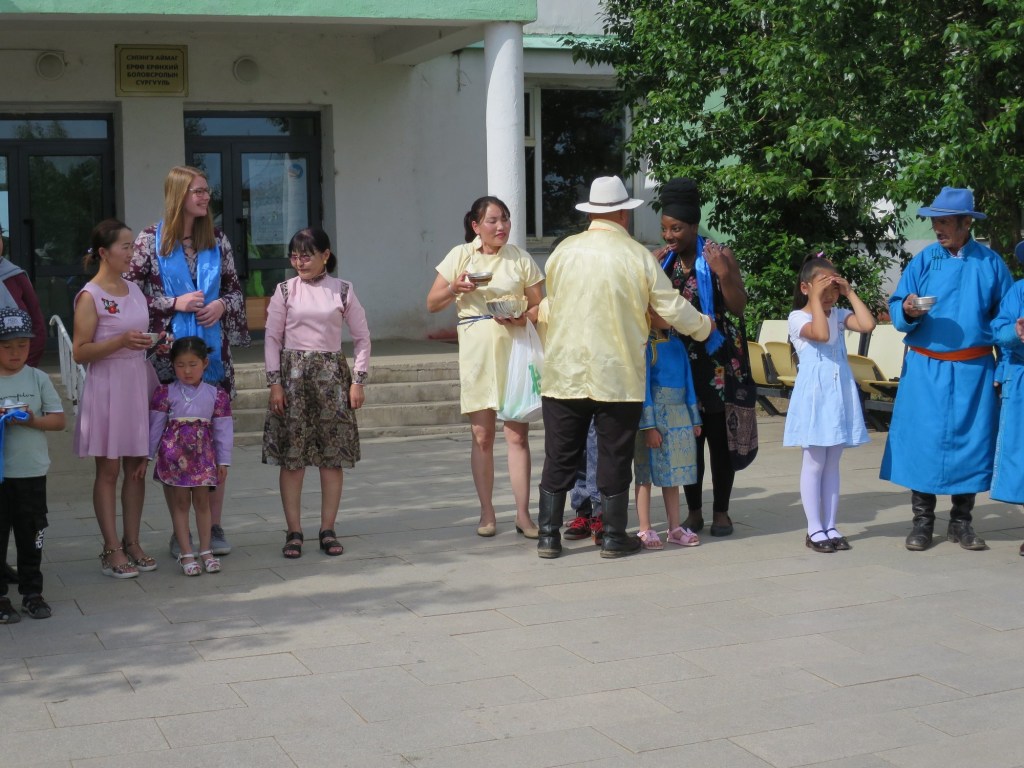
My Host mom, grandma, and sister welcomed me
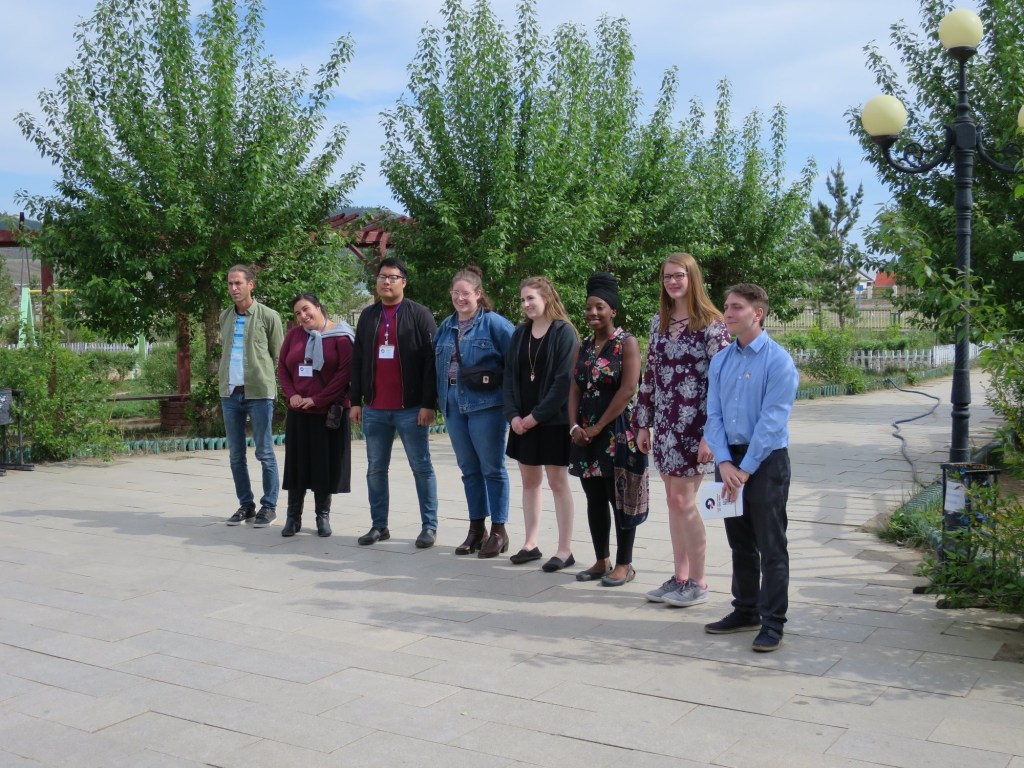
It was exhilarating. Nerve-wracking. Okay, maybe even scary. But excitement nearly out-weighted those other emotions. We lined up in front of the host families dressed in their beautiful traditional Mongolian clothing. We were not instructed to wear overly nice clothing, but I was grateful that I put on a nicer dress (actually stolen from my teammate, Erin… sorry, Erin and thank you!) We were called one by one to be claimed by our family and then went into the school we would have training at for the next three months to have a reception with some juice, water, and snacks. Everything was a little awkward with the language barrier, but you could feel the families’ excitement to take care of another child for a few months. My grandmother, mother, and little sister (6-years-old) were there to greet me and take me home. We packed my host family’s car with my belongings (they seemed a little stunned at all the bags that came out of the van with my name on them). I didn’t mention to them that there was actually one more large bag that I left with Peace Corps as a winter bag that I would be picking up later after PST (mainly because I had no idea how to say that in Mongolian, but also because my new family was stuffed in our little white car with all my luggage as it was).
Because this is an accurate recount of my experience, and that usually means there were exceptionally awkward and embarrassing happenings, I’ll continue with the details of my first hours at PST site. We pulled into the quaint yard of my new house, and there were a few pressing matters I needed to take care of before I could begin making good impressions with my family: 1) My headache had gotten worse, and I was actually suppressing nightmare-like cognitions of vomiting in my new room within minutes of being introduced to it. 2) I really needed to pee. I tried to stay hydrated on the ride here, but evidently what I didn’t sweat out on this warm day went right through me. I was mentally prepared for a hole in the ground, but I needed to be shown the location of said hole… soon. 3) I didn’t have anywhere near the necessary language skills to express these dire needs as my family scrambled to help bring my bags in and set the table for dinner. On top of all this, when we got home to greet my host aunt and 2-year-old host brother, he had just woken up from a nap, obviously suffering from an allergic reaction and needed to be rushed to the hospital. Only my host mom went because everyone wanted to make sure I settled in well. Add guilty to the many emotions I was feeling at this given moment, and you’ve got a delicious cocktail of borderline panic stirring.
Thankfully, I was somewhat prepared and had a little sheet with common words and phrases helpful for the beginning of this transition. I found the word for “outhouse” and said a pronunciation probably 60% right to my host aunt maybe six times before she thankfully understood what I needed and walked me across the yard, past the garden to our outhouse. My intense need for this little red house at the corner of our property probably made first impressions a little more forgiving, but, guys, it was totally fine and has been fine ever since. Lack of plumbing has been a frequent question I’ve been asked about and honestly, it’s been very easy. Different and an adjustment like everything during the first couple days, but easy.
Once one of my urgent needs was taken care of, my second seemed to get worse. Dinner was already ready and sitting on the table. I began stuffing an already pretty stuffed stomach (my host grandmother made sure I ate plenty of chips and peanuts after getting out of the van), so that I wouldn’t be rude. This seemed to be making my head even worse. Visions of vomit were getting dangerously close to becoming my reality. My aunt and grandma stepped into the kitchen for something, allowing me to run to my room to grab my Mongolian language cheat-sheet. I found a phrase close to what I wanted to say: “I would like to rest.” As soon as they got back in the room, I fumbled my way through the pronunciation, but my host grandma seemed to get it right away. She motioned for me to go to my room. I said thank you (in Mongolian—one of the few words I mastered before leaving the states), and headed to my room. What I wasn’t expecting was each family member grabbing every single food and drink item off the dinner table and stacking them on the table in my room. I had no idea how to say ‘That is not necessary” or “Please, continue to eat; I’ll be rested soon.” Instead, all I could say was “Thank you, thank you, oh, thank you!” as the food poured into my tiny tidy room. The moment my door closed, I popped some Advil, took off my glasses, and closed my eyes for an hour (after chugging the whole liter of water from the dinner table that conveniently got carried into my room, also). Sleep wouldn’t come because my mind was going in all different directions, but the short rest was helpful. I couldn’t stop wondering what they were eating for dinner if all the food was sitting in my room.
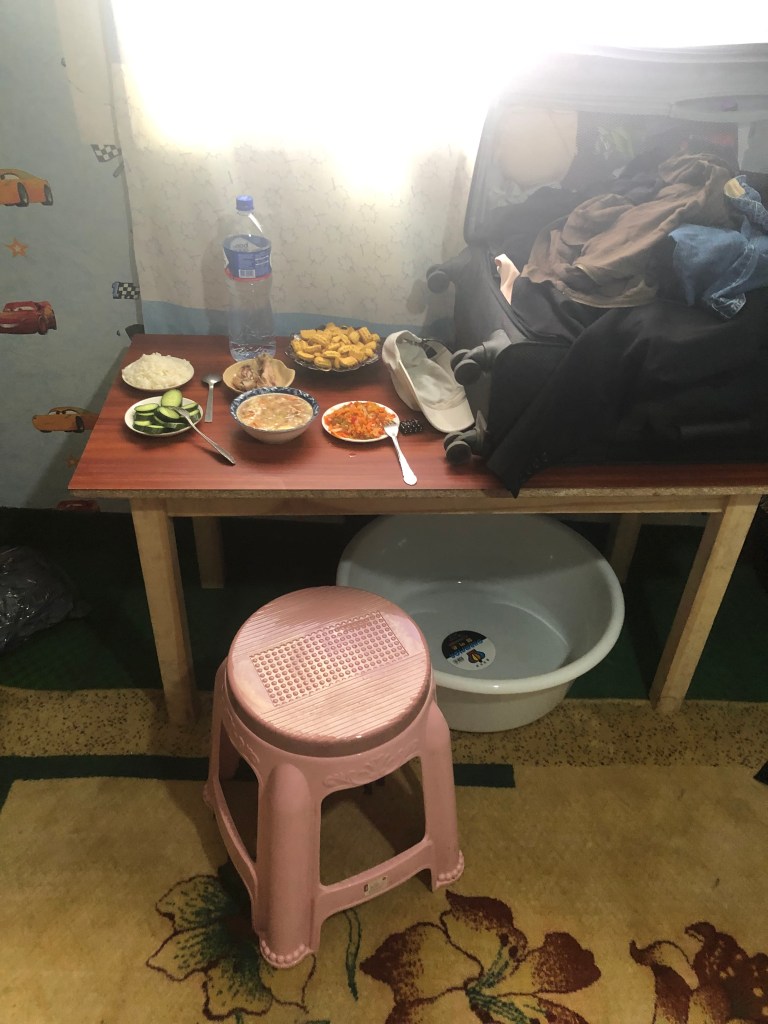
Okay, so the first couple hours were rough. However, when I emerged from my room later, my little brother was back home and giggling, and my host aunt and mother were eager to have a couple broken conversations in English/Mongolian about ages, family members, likes and dislikes, etc. I showed my family book my mom and I made with Shutterfly before I left home, and they shared what English they knew. Thankfully, my host mom had taken a few English classes and it is better than my Mongolian, but that doesn’t really say much. Basically, I was able to figure out names, ages, and relationship to each other, which was a good start.
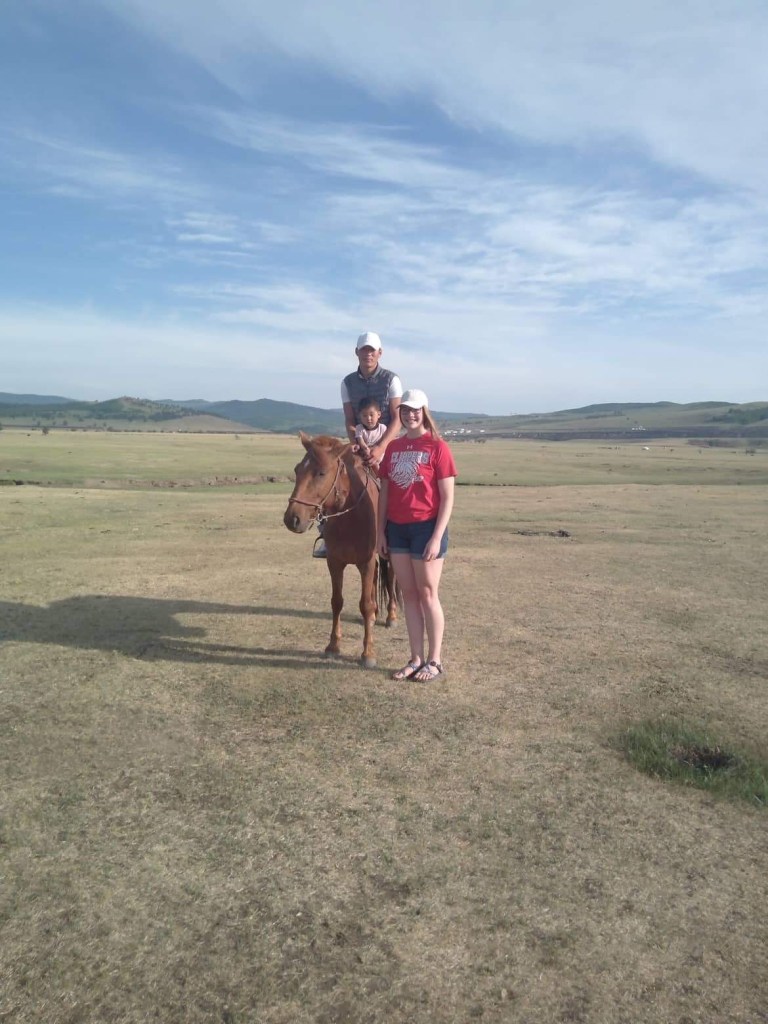
As you can imagine, I am in a nice routine at this point, as is my host family. We get along really well. I am best pals with my 6-year-old sister, my 2-year-old brother is the same as any other toddler in the Terrible Twos stage (occasionally adorable, always sassy), and my aunt (who is only 14) likes to learn English in my room nearly every night as she teaches me Mongolian simultaneously. My host dad has a job at the mine and is gone for days at a time. I actually didn’t meet him until around day eight. Both of my parents are 25, so I don’t call them “mom and dad” like some other PCTs call their host parents. I call them by their names, just as I do my aunt and siblings. I think the youthfulness in the house has helped with the transition. There’s a lot of joking, laughing, playing volleyball, and learning. As much as I am learning to live in Mongolia, they are learning to live with an American. I think my comfort level with carbs, countryside activities like riding horses and milking cows, and my shared love for volleyball has helped make their new experience easier, in addition to making my transition easier. They treat me as one of their own and have made me feel right at home.
No worries, everyone. I am doing just fine. I already know more Mongolian than just “thank you,” although there is still a long language acquisition road ahead of me. I am looking forward to sharing more stories, mainly because I have better ones to share that don’t involve bodily functions. J
Emilie
 A Peace Corps Journey: Mongolia Edition
Boring? Not in the least. Vivid as a video.
LikeLike